Between splatters, cooking residue and stuck-on food, a kitchen collects grime faster than most of us can keep up with. Two things you already own, baking soda and dish soap, combine into a paste that handles a surprising amount of it.
Plenty of cleaners promise to do everything. In my experience around here, the simple pantry staples are the ones that actually get reached for every week, and this pairing is a good example of why.
Why these two work well together
Each one handles a different part of the job. Dish soap contains surfactants, which loosen grease and let water carry it away at rinse time. Baking soda is mildly abrasive, so it helps lift dried-on residue without the harshness of a scouring powder.
Mixed together, they form a spreadable paste that stays where you put it. That is the real advantage: instead of runny soap sliding off a vertical edge or a sloped sink, the paste sits on the grime and gives you something to work with.
How to mix it
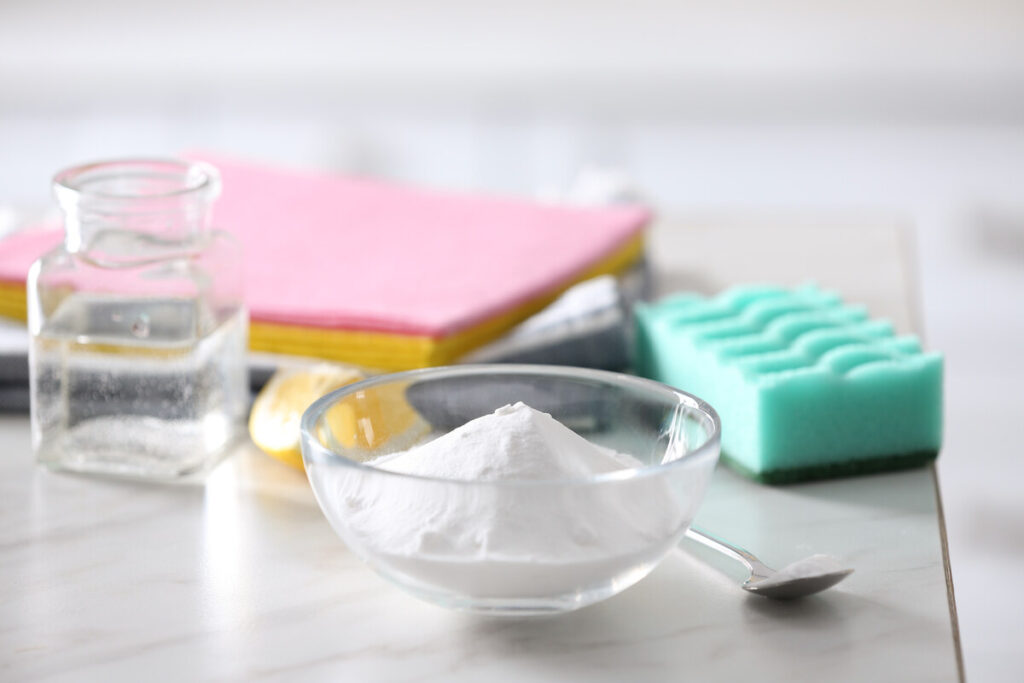
You only need a small bowl and a spoon:
- 2 tablespoons of baking soda
- 1 teaspoon of liquid dish soap
- A few drops of water, added slowly
Stir, then add water a drop or two at a time until you have a smooth paste that spreads easily, a bit like frosting. If it turns runny, add a pinch more baking soda. Make only what you need, since it is quick to whip up again.
Where it earns its keep
Scoop a little onto a soft sponge or cloth and rub gently in small circles. Then wipe clean with a damp cloth and rinse well. It works nicely on:
- A cool cooktop with cooking splatters and light greasy film
- A stainless or porcelain sink that has built up a dull, greasy layer
- Pots, pans and baking dishes with stubborn bits of food stuck on
- Food containers that hold on to oily residue
For baked-on spots, spread the paste over the area and let it sit for a few minutes before scrubbing. Give the soap time to soften things up and you will need far less elbow grease.
Where to skip it
The same grit that lifts grime can leave tiny scratches if you press too hard. Avoid this mixture on nonstick coatings, lacquered or glossy finishes and delicate materials. Natural stone such as marble also deserves a cleaner made for it.
Before you commit, test a small, out-of-sight spot first, and always choose a non-abrasive sponge or a soft cloth rather than steel wool. Light pressure is plenty.
Two things to remember
First, this paste cleans, but it is not a disinfectant. It will not kill bacteria, so if you are dealing with raw meat juices, follow up with a proper sanitizing step. Second, never combine it with other cleaning products, and especially not with bleach. Mixing cleaners can create dangerous fumes, so keep each product separate.
Used with a light hand, this little paste is cheap, quick and easy to keep on rotation for those everyday messes that never seem to stop showing up.