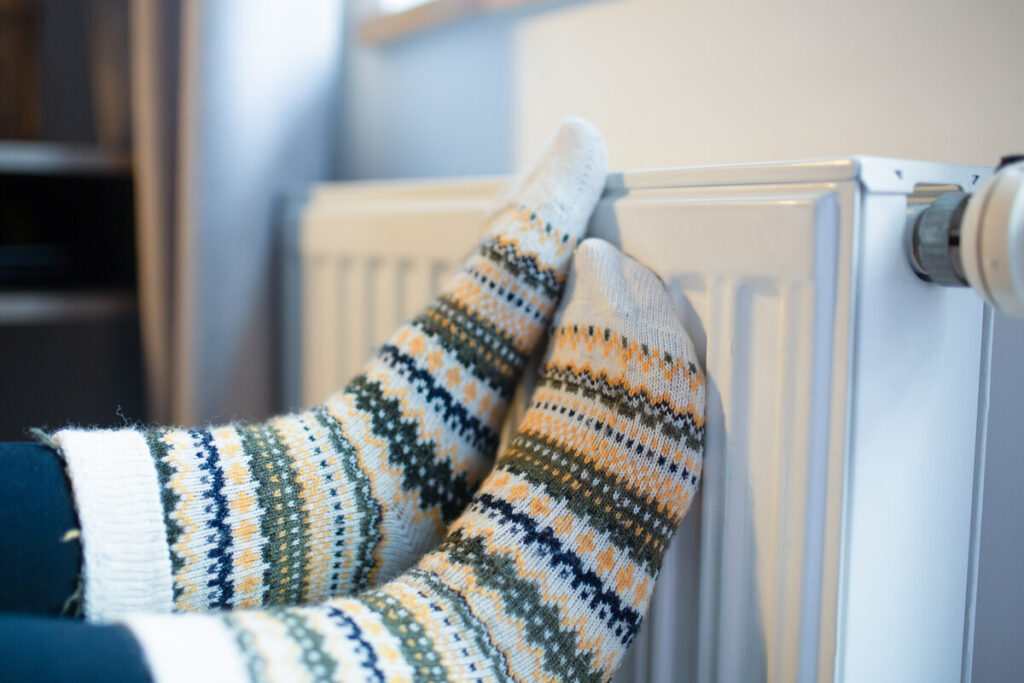
When the temperature outside drops, it is easy to feel like your radiators are working overtime and the house still never gets cozy. Part of the problem could be a cold outside wall quietly soaking up heat before it ever reaches you.
Around here, I am always hunting for small fixes that do not involve a contractor, a big bill or tearing anything apart. This one fits the bill: a thin panel that hides behind the radiator and costs very little.
What a reflective radiator panel actually does
A radiator does not only warm the air in the room. It also radiates heat out the back, straight into the wall behind it. If that wall is an exterior wall with little insulation, which is common in older homes, some of that warmth simply leaks outside.
A reflective panel is a thin sheet or roll of reflective material, sometimes backed with a bit of insulating layer. It slides between the radiator and the wall, and it bounces some of that heat back into the room instead of letting the wall absorb it. Once it is in place, you cannot see it at all.
Where it helps and where it does not
This is not a miracle product, so it is worth being picky about where you use it.
- Best spot: radiators mounted on exterior walls that are poorly insulated, like the cold north side of an older house.
- Not worth it: radiators on an inside wall shared with another heated room. The heat that reaches that wall stays in the house anyway.
- Newer, well-insulated homes: expect very small gains, if any.
So there is no need to buy enough for every radiator in the house. Walk around, find the ones sitting against your coldest walls, and start there.
What to expect on your heating bill
The savings are usually modest, think a few dozen dollars a year at best, depending on how many radiators you cover, how well your walls are insulated, your heating system and what you pay for energy. A roll is inexpensive and can be cut to fit several radiators, so it can still pay for itself over a couple of winters in a drafty older place.
Be wary of packaging that promises huge savings. A panel that reflects a lot of heat does not automatically cut your bill by the same amount, and it will never replace real insulation or a sensible thermostat setting. Think of it as a cheap extra, not a fix-all.
How to install one behind a hot water radiator
- Turn the heat off and let the radiator cool down completely.
- Measure the height and width of the radiator so you know how much material you need.
- Buy a panel made for this job. Plain kitchen aluminum foil is a poor substitute, since it is hard to keep flat and in place and was not designed for it.
- Cut it slightly smaller than the radiator so it does not stick out at the edges.
- Slide it behind the radiator with the shiny, reflective side facing the radiator, following the directions on the package.
- Secure it with the adhesive or clips that come with it. You usually do not need to take the radiator off the wall.
If you rent, look for a removable style, and check with your landlord first if your lease requires it.
A safety note on electric heaters
This trick is meant for wall-mounted hot water or steam radiators. Do not improvise it behind an electric baseboard heater, convector or any electric heater. Those need clearance for air to circulate, and the manufacturer’s safety distances must be followed.
Other easy ways to hold the heat in
While you are at it, a few free habits help just as much: keep furniture and long curtains away from your radiators so the heat can actually move into the room, close the blinds or drapes at night, and add insulation where you can. Small steps like these add up fast when the cold really sets in.