If you are standing at the trellis with pruners in hand, ready to cut everything back, stop right there. Large-flowered clematis that bloom in late spring already carry next year’s buds on the stems you can see today, so a big fall haircut means a bare vine in May.
Bloom time decides the pruning plan, not flower color
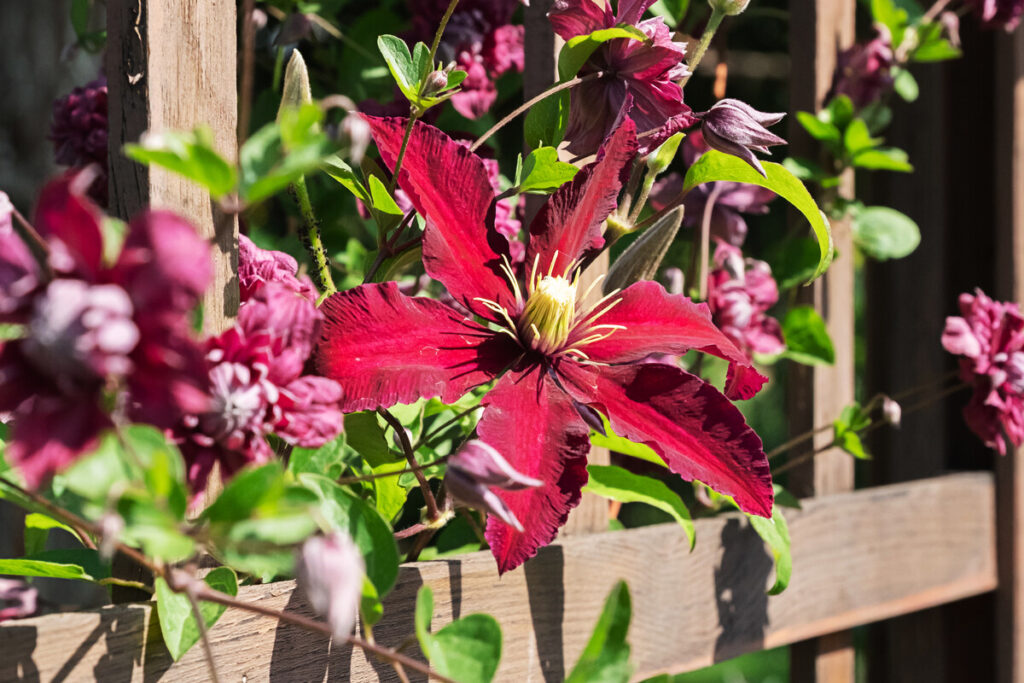
Before you cut anything, work out which kind of clematis you have. The easiest clue is when it flowers. A vine that opens its first big blooms in May or early June, on brown, woody stems grown the year before, belongs to the group often labeled “Group 2.” Popular examples include ‘Nelly Moser’, ‘The President’ and ‘Niobe’. Their flowers can reach 5 to 8 inches across, and many put out a smaller second wave in late summer.
A clematis that waits until late June or July and blooms on long green shoots grown this season (think ‘Jackmanii’ or the viticella types) is a “Group 3.” Those get cut back hard. Montana and evergreen armandii types are pruned right after they finish flowering. If the plant tag is long gone, watch it bloom next year and make a note before you ever reach for the pruners.
What you can do in fall: three small jobs
For Group 2 vines, November is a tidy-up month, nothing more:
- Remove dead wood. Gray, brittle stems with no buds at all are dead. Cut them out.
- Pull spent flowers and fluffy seed heads. A gentle tug is enough if the messy look bugs you.
- Retie loose stems. Tighten the supports before winter wind arrives, fastening stems as close to horizontal as you can.
That is the whole list. The buds for spring are already formed on this year’s ripened wood, so shortening those stems sends your flowers straight to the compost pile.
The real pruning happens in late winter
Wait until the buds start to swell, which is roughly February in mild climates and as late as March or early April in colder zones. Let the buds be your calendar, not the date on the wall. Then:
- Clean your blades with rubbing alcohol, especially when you move from one plant to the next. Clematis wilt, a fungal disease that hits large-flowered hybrids hardest, spreads easily on dirty tools.
- Work stem by stem from the top down. Follow each one to the first pair of plump, green, healthy buds.
- Cut about half an inch above that pair.
Thin, dried-out tips fall away, while the framework that carries the flowers stays. A severe cut at this stage costs you most of the May show. Waiting too long is a mistake too: once new shoots are 8 inches or so, you will snap them off one by one while you work.
After pruning, scratch a handful of finished compost around the base and spread 2 to 3 inches of mulch on top. Clematis like their heads in the sun and their roots cool, a rule that applies from the day you plant them.
The cut most people skip: early summer
Once the first flush has faded, usually late June or early July, trim the finished stems back to a strong bud or a vigorous side shoot just under the old flowers. Three to four weeks later, fresh growth takes off and carries the late-summer rebloom. If you have ever wondered why your second flowering never showed up, this skipped step is a likely culprit.
What to do with a tangled, overgrown vine
When a clematis has turned into a snarl that flowers far above eye level, ease it back into shape instead of scalping it. Reduce it more firmly right after the first bloom, spread over two to three seasons. The other option is a hard cut to roughly 1 to 3 feet every three or four years, knowing you will get fewer flowers that year.
A simple fix for next year’s guesswork
Write “light prune, late winter” on a weatherproof marker tag and tie it to the trellis. It takes ten seconds and settles the question for good, no matter how long it has been since you planted.