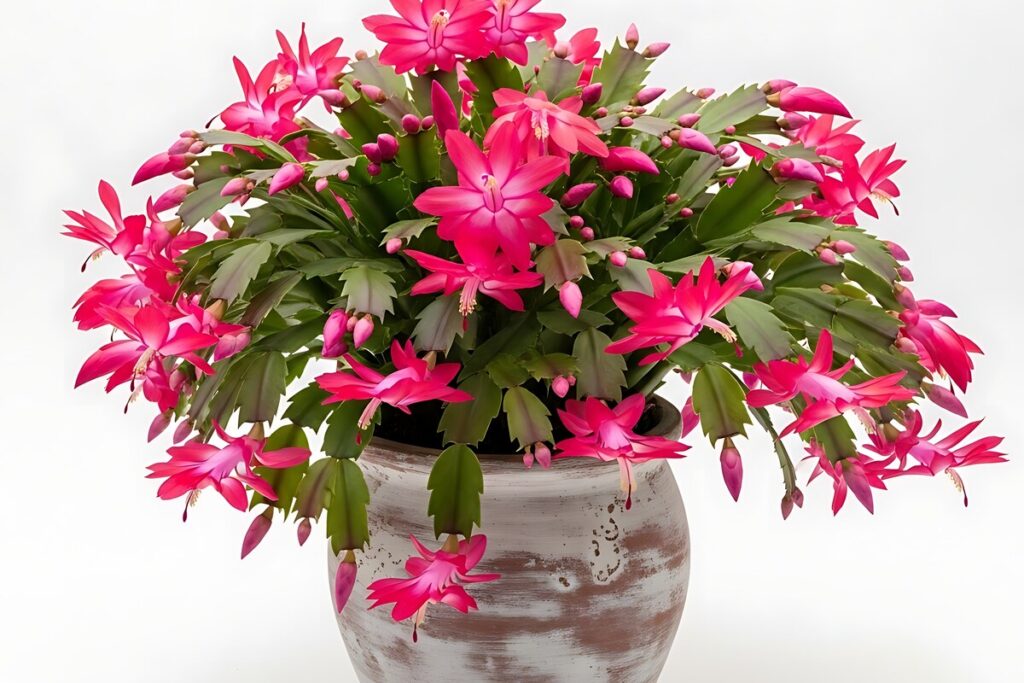
Reddish-purple edges and slightly floppy segments on your Christmas cactus in November are, most of the time, nothing to worry about. It is usually the plant getting ready to bloom. The trick is knowing the one or two signs that mean something is actually wrong.
Why a healthy plant turns red and soft in November
Holiday cactus blooms from November through January, and that show is set up by weeks of long, cool nights and noticeably less water starting in late September. If you followed that routine, or if the plant simply got ignored for a while, the flat segments (the “leaves” everyone talks about are really flattened stems) lose a little water and pick up a colored rim.
The red comes from pigments the plant makes as a kind of sunscreen. When light is stronger than the plant can use, especially behind a sunny south-facing window, those pigments show up first on the edges and on the most exposed segments. A plant resting on purpose reddens; a plant sitting in soggy soil rots.
Keep in mind that the plant should never sit below about 50°F, and a dry blast from a heating vent or a sudden move from a cool porch into a 70°F living room can wrinkle segments within days. That is often when the panic sets in, right before the holidays.
The three-minute test
1. Check the soil. Push a finger about an inch down. If it is dry and crumbly while the segments are floppy, the plant is just short on water pressure and will plump back up within a day or two after a slow, thorough watering. If it is damp or sticky and the segments are still mushy, the roots may not be taking up water anymore. Watch out for a decorative outer pot that never gets emptied, or peaty soil that is dry on top and soggy underneath.
2. Look at the color of the soft spots, in daylight. Stress pigment looks firm, glossy, and a clear reddish-purple. Rot looks dull gray-green, translucent, or brownish, feels squishy, and sometimes slides right off the plant.
3. Inspect the base only if the first two tests point to rot. Brown or tan tissue at the soil line and dark, slimy, swampy-smelling roots mean a fungal problem. This test is the most reliable, but repotting a plant that is full of buds can make them drop, so skip it unless you already suspect rot.
Quick comparison
- Normal reddening: reddish-purple edges, soft but springy, soil dry an inch down, healthy green base, maybe a few buds forming over the next two weeks.
- Rot: dull gray-green or brown, mushy all the way through, damp soil, brown base, segments dropping in clusters, the whole plant sagging.
Right now, nine times out of ten it is the first scenario.
What to do next
- Water slowly until it drains, then empty the saucer within ten minutes. Standing water is what feeds the fungi that cause rot.
- Let tap water sit out to reach room temperature before using it.
- If the red is spreading across the whole plant, slide the pot a foot or so back from the glass or move it to an east or west window.
- Once buds form, stop turning or moving the pot, and aim for roughly 65 to 68°F during the day.
- Use a cactus and succulent mix with a handful of perlite or coarse sand, in a pot with drainage holes.
If the base is brown, act fast
Do not wait. Snip two or three healthy segments from the top of the plant, let them dry for a few hours, then set them in a barely damp, fast-draining mix to root. The mother plant is often lost, but the plant itself almost never is.