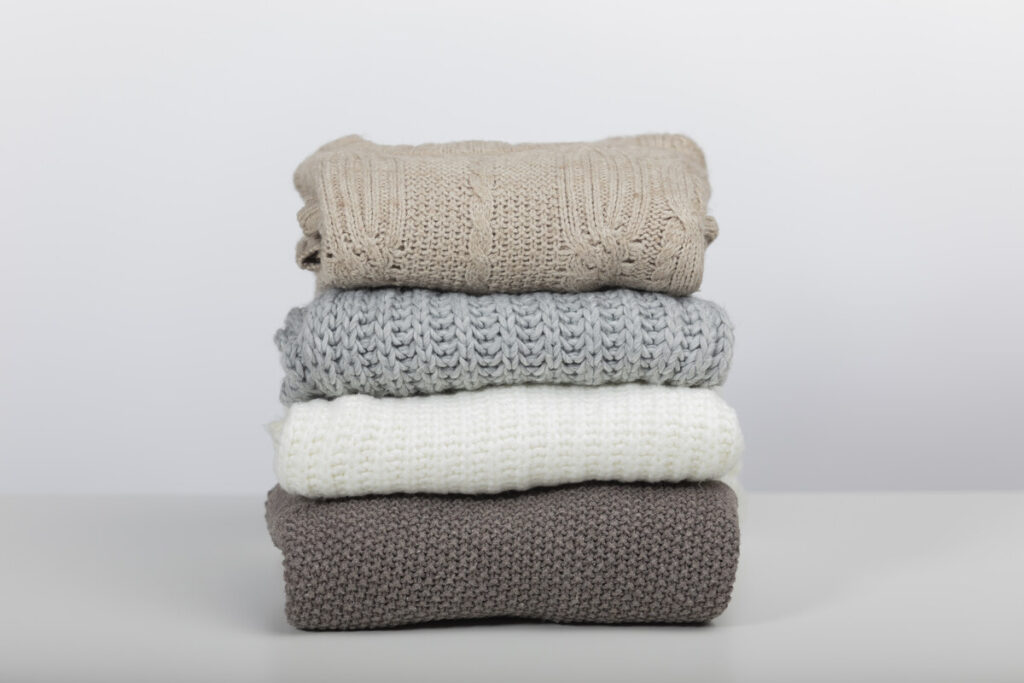
When the drying rack is already full, draping a freshly washed sweater over a hanger feels like the obvious move. But a chunky knit full of water is surprisingly heavy, and letting it dry upright is one of the fastest ways to end up with saggy shoulders and a body that suddenly reaches your thighs.
Around here, sweater season means a steady stream of knits going through the wash, and I learned the hard way that how you dry them matters just as much as how you wash them. The good news is that the fix is simple, cheap, and only takes a couple of extra minutes. It starts the second the sweater comes out of the machine or the sink, before you even think about where to put it.
Why hanging a wet sweater is a bad idea
Knit fabric is basically a series of loops, and loops stretch. When a sweater is still holding a lot of water, all that weight pulls down on the fibers. Hang it from the shoulders on a hanger or fold it over a clothesline, and gravity does the rest: the torso gets longer, the sleeves drop, and the shoulders pick up those little pointy bumps from the hanger. Thick wool knits are the worst offenders because they hold the most water.
That is why wool experts and knitwear makers almost always say the same thing: dry sweaters flat. When the garment is lying down, its weight is spread out over the whole surface instead of hanging from just a few points.
One quick note before you start: check the care label first. It tells you how that particular piece is meant to be dried, and some sweaters are actually fine in the dryer on a specific setting. When the label says to dry flat, though, take it seriously.
Step one: roll it in a towel
The towel roll is the part most people skip, and it makes the biggest difference. Here is how it works:
- Lay a clean, dry bath towel out flat.
- Spread the wet sweater on top of it. If it was hand washed and is still dripping, support it from underneath with both hands as you move it so the weight does not pull on the knit.
- Roll the towel and sweater up together, like a sleeping bag.
- Press down gently on the roll with your palms. Do not twist or wring it, since twisting can distort the fibers just as badly as hanging.
When you unroll it, the sweater will still be damp, but a good amount of the water will have moved into the towel. That is where you actually save time, because there is simply less water left to evaporate.
It is worth being honest about one thing: just setting a sweater on a towel without pressing it does not magically make it dry faster than a hanger would. The real benefit of drying flat is protecting the shape of the sweater, and the towel roll is what speeds things up.
Step two: reshape it by hand
Before the sweater settles in to dry, give it a little attention. Straighten the side seams, smooth out the collar or neckline, and lay the sleeves in place without tugging on them. Whatever shape you leave it in now is pretty much the shape it will keep, so this minute is well spent.
Step three: dry it flat, with some airflow
After pressing, move the sweater onto a second dry towel or onto a flat mesh drying rack. You have two good options:
- A dry towel: spread the sweater out without folding the sleeves over the body, since overlapping layers stay wet much longer. If the towel underneath is still soggy after a few hours, swap it for a fresh one.
- A flat mesh rack: these let air circulate underneath the sweater too, which can help it dry faster while keeping it perfectly horizontal. Many fold up small enough to sit over a bathtub or on top of a regular drying rack.
What to avoid when you are in a hurry
I know the temptation when you want to wear that sweater tomorrow morning. Still, skip the shortcuts that use direct heat. Do not lay a wet sweater on a radiator, a heating vent, or in strong direct sun. Wool, cashmere, and other delicate knits do best drying flat in a room with decent airflow, away from heat sources.
And before you fold it back into the drawer, do a quick check of the cuffs and the collar. Those thicker spots tend to stay damp long after the rest of the sweater feels dry, and putting a knit away even a little damp is an easy way to end up with a musty smell.
Once you get into the habit, the whole routine takes maybe five minutes of hands-on time, and your favorite sweaters will keep fitting the way they did the day you bought them.