When a wall looks dingy, grabbing the bleach and a spray bottle feels like the fastest way to make it bright again. Most of the time, though, it is the wrong tool for the job. There is exactly one situation where misting bleach on a wall really earns its spot, and knowing which one saves you paint, money and a headache.
You know the scene. A brownish ring shows up in the middle of the living room wall, right where you painted over it after that leak last year. Or the hallway just looks tired, covered in little handprints and a gray film you swear was not there last month. The instinct is to go big: fill a sprayer with bleach, soak the whole wall and let the chemistry do the rest. That instinct feels responsible, especially if you are worried about mold or germs. It is just rarely the right call.
Why bleach is usually a bad match for your walls
Bleach is a great cleaner in the right place. It disinfects high touch surfaces and can even knock out mold spores. But an interior wall made of drywall or plaster is not a kitchen counter, and it does not need to be sanitized.
The active ingredient in household bleach, sodium hypochlorite, is tough on paint finishes and on caulk. Spray it across a painted wall and you risk dull patches, faded color or a finish that starts to break down. And never use it right before or after a cleaner that contains ammonia or acid, like vinegar or some descalers: mixing them releases irritating gases that hit your eyes and lungs hard, especially in a small room with the windows shut.
Here is the other thing. That strong bleach smell makes a room feel super clean, but it does not mean much. Bleach breaks down fairly quickly with heat and light, and if all you had on the wall was a little dust and a few fingerprints, a damp sponge would have handled it. You end up giving the wall a harsh chemical treatment it never needed.
For everyday wall grime, keep it simple: warm water, a drop or two of dish soap and a soft sponge, wrung out well so you are not dripping water down the drywall.
The one stain where bleach really shines
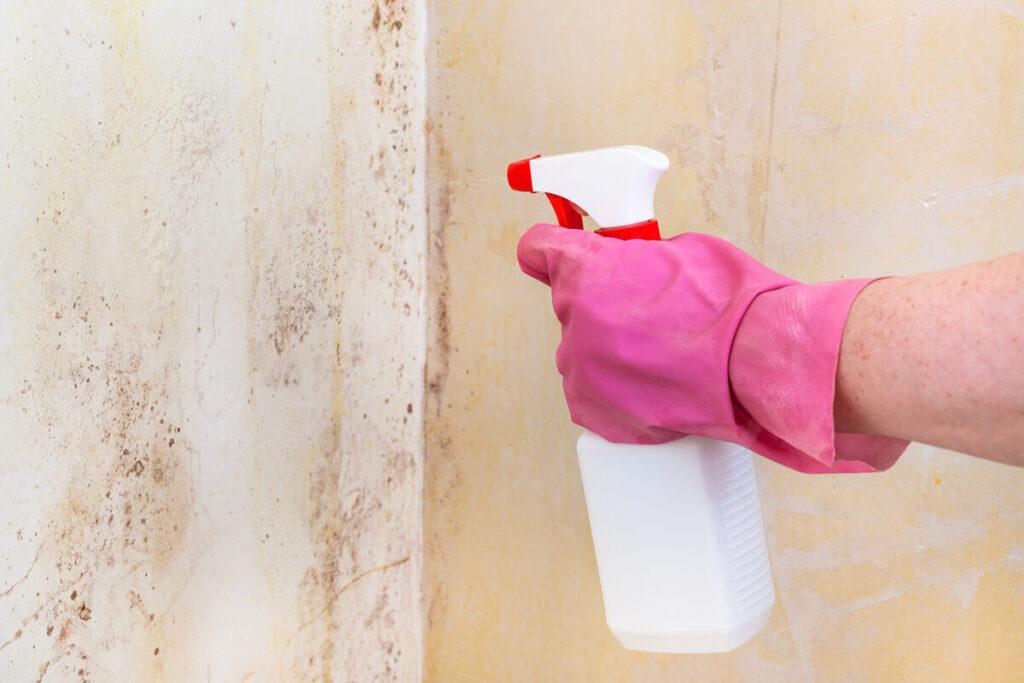
The exception is the old water stain. You know it when you see it: a yellow or brown ring on a drywall or plaster wall or ceiling, left behind after a leak that has already been fixed. Those rings are stubborn, and they have a nasty habit of bleeding right through fresh paint.
This is where a light mist of diluted bleach actually works well. The goal here is not disinfecting anything. It is lightening the mark so it fades away, or at least fades enough that a fresh coat of paint can finish the job.
Always dilute it first
The golden rule with bleach is to cut it with water. A good starting point is one part bleach to three parts water, so one cup of bleach to three cups of water in your spray bottle. Some people go as strong as half bleach and half water for a really stubborn ring, but if you do, keep the spray to a very fine mist. I would always start with the weaker mix and only go stronger if the stain refuses to budge.
How to spray bleach on a wall the safe way
Before you even mix anything, set yourself up so this stays a quick, boring little job:
- Put on gloves, eye protection and a mask.
- Open the windows wide and get some air moving through the room.
- Cover the floor and move or protect any furniture nearby.
- Make sure you have not used anything with ammonia or acid on that spot recently.
Then work through it step by step:
- Test first. Mist a small, hidden spot and let it dry to check that the paint does not change color.
- Spray lightly. Aim a fine mist right at the stain. You want it damp, not soaked, and nothing should be running down the wall.
- Let it sit. Give it about 30 minutes to work.
- Wipe it down. Use a damp sponge to take off any extra solution.
- Repeat if needed. Older, darker stains often need two or three rounds before they really fade.
When the ring will not go away
If the wall is fully dry and you can still see the ring, stop spraying. At that point the fix is a coat of stain blocking primer, then your regular paint on top. Skipping the primer is how those rings sneak back through a brand new paint job.
And if the wall feels crumbly, the paint is bubbling, or the spot still feels damp, put the bleach away entirely. That means moisture is still getting in somewhere, and the leak needs to be found and fixed first, by a pro if necessary. No amount of spraying will solve a problem that is still dripping behind the drywall.
Around here, the bleach bottle lives on a high shelf for a reason. For everyday smudges, soap and water win every time. Save the spray bottle for that one stubborn water ring, and your walls will thank you.