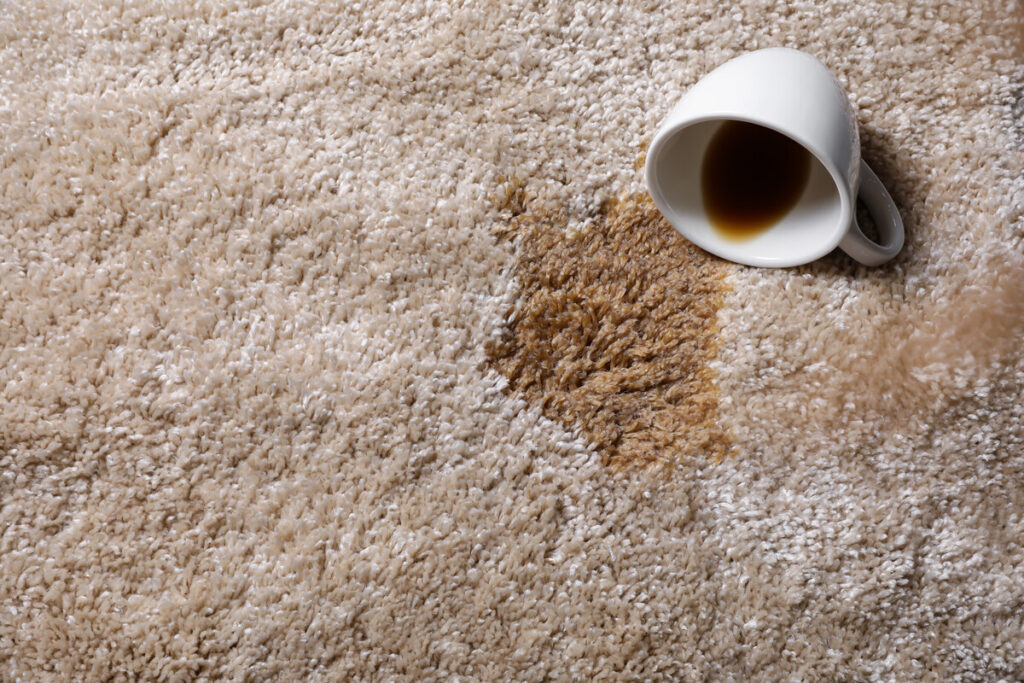
A full mug of coffee tipped over on the living room rug is one of those moments every busy house knows by heart. Powdered oxygen bleach can rescue that rug, but if you use too much or skip the rinse, it can leave behind a ring that looks worse than the original spill.
If you keep a tub of oxygen bleach (sodium percarbonate) in the laundry room, you already own one of the best stain fighters for rugs and carpet. The trick is not the product itself. It is one small test you do before you ever touch the stain.
Why oxygen bleach works so well on rug stains
When sodium percarbonate hits hot water, it breaks down and releases active oxygen. That bubbling action is what loosens the tannins in coffee, tea and red wine, which is why it is sold as a safe choice for carpets and area rugs, not just laundry. Unlike chlorine bleach, it does not strip color from most washable fibers.
Most how-to guides describe roughly the same routine: a short soak time and a very thorough rinse. What actually makes the difference between a clean rug and a stubborn halo, though, is checking how your rug reacts before you start.
The two-spot test that prevents a ring
Pick a hidden corner of the rug, like the part tucked under the sofa or a dresser. You are checking two things here: whether the colors bleed, and how the fibers handle getting wet. Some rugs mark the second they get damp, while others shrug off a little spot cleaning without any trouble.
Here is how I do it around here:
- Dab one small square with plain water.
- Right next to it, dab a second square with a few drops of your oxygen bleach solution.
- Blot both spots well, then let them dry completely.
Now look closely. If a ring shows up around the spot you wet with plain water only, the problem is the rug, not the cleaner. That rug does not like moisture, and a spot treatment will probably leave a mark no matter what you use. In that case, a full cleaning of the whole rug is the safer route.
How much oxygen bleach to use
Recipes for a rug solution all land in the same neighborhood:
- 2 to 3 tablespoons of oxygen bleach powder per quart of hot water, for a single stain.
- About 1/2 cup of powder in 3 quarts of very hot water, if you are tackling a bigger area.
- If you buy premeasured packets made for carpets, follow the label, which usually means dissolving one dose in about 2 cups of water.
Always mix it fresh. The solution loses its punch quickly, so a batch you saved from last week will not do much. Keep the soak time short too: 5 to 10 minutes is plenty, or up to 15 minutes for a ready-made carpet product.
One important exception: skip this method on wool, silk and leather. Those materials are much more delicate, and manufacturers advise against using oxygen bleach on them.
How to treat the stain without leaving a halo
Once your test spot comes out clean and dry with no ring, you are ready to go.
Blot first, never scrub
If the spill is fresh, soak up as much as you can with a clean cloth. Press and lift instead of rubbing, which only pushes the stain deeper and spreads it wider.
Apply the solution in small doses
Use a spray bottle or a cloth that is just slightly damp with the solution. You want to wet the stained fibers, not soak the backing underneath. When water reaches the backing, it travels outward and dries as a ring.
Rinse longer than you think you need to
After 5 to 10 minutes, it is time for the step that really stops rings from forming. Dab the area again and again with a clean cloth dampened with plain water, working slightly past the edges of the stain so the outline blends in. Leftover cleaner is what usually causes that telltale halo.
Dry fast, then vacuum
Blot with a dry towel to pull out as much moisture as possible, and help it dry quickly with a fan or an open window if you can. Once the rug is completely dry, run the vacuum over the spot to fluff the fibers back up.
It is a few extra minutes the first time, but once you know how your rug behaves, the next coffee spill is just a quick cleanup instead of a full-blown panic.