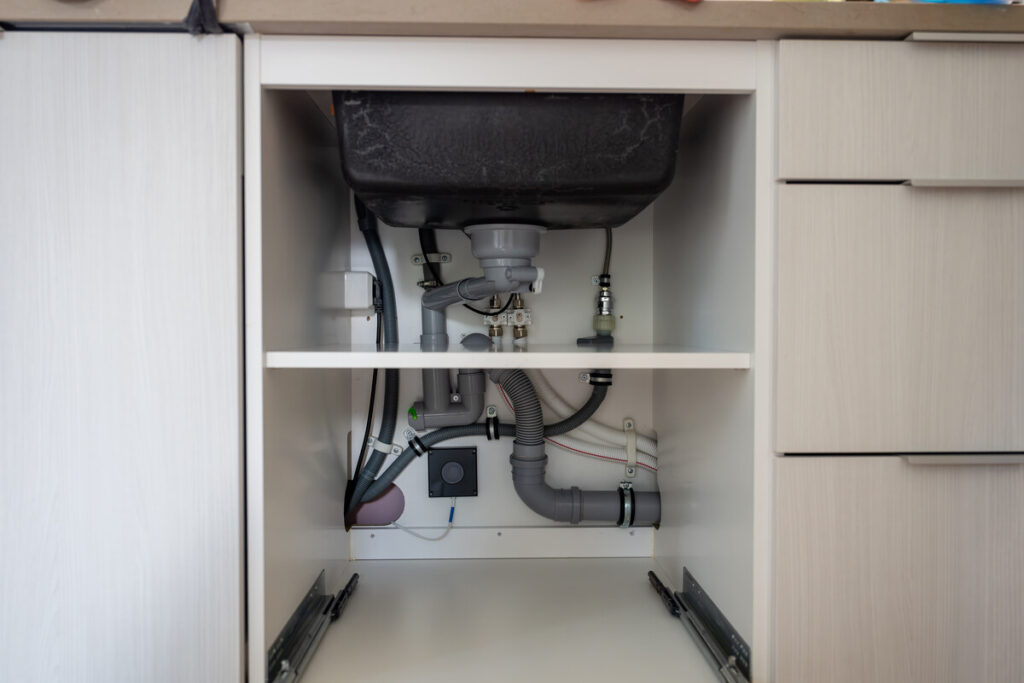
When the forecast drops below freezing, the most important thing you can do for your plumbing takes about two seconds: open the cabinet door under your sink before you go to bed. It sounds almost too simple, but that little door is often the difference between a normal morning and a burst pipe.
Around here, the sink cabinet is basically a junk drawer with hinges, and the door stays shut all year long. That habit is perfectly fine in July. On a bitter winter night, though, a closed cabinet turns into a tiny cold pocket right where your water lines run.
Why the pipes under your sink freeze first
Your kitchen might feel cozy, but the air inside a closed cabinet is a different story. With the door shut, warm air from the room can no longer reach the plumbing. The space underneath the sink cools down fast, especially when the sink sits against an exterior wall that isn’t well insulated, which is the case in a lot of houses.
That is why kitchen and bathroom cabinets show up on every list of the most common spots for frozen pipes, right next to unheated garages, attics, crawl spaces and basements. Once outdoor temperatures dip into the low 20s Fahrenheit, exposed pipes are at real risk.
The problem is simple physics. Water expands as it turns to ice, and that ice pushes hard against the inside of the pipe. Copper, PEX or PVC, it doesn’t really matter: enough pressure can split any of them. The sneaky part is that you often won’t see the crack until things thaw and water starts flowing again, sometimes straight onto the floor of your cabinet.
The old-school habit that protects your plumbing
Plenty of grandparents did this without thinking twice: on nights when a hard freeze is coming, they propped open the doors under the kitchen and bathroom sinks before bed. Today it is standard advice for any cabinet that hides pipes, and it really is that easy.
For it to work, though, the air needs room to move. If your sink cabinet is stuffed with sponges, spray bottles and trash bags, early winter is a good time to clear it out. Pull things away from the pipes and push whatever stays to one side.
One important note if you have little ones or pets: an open cabinet means open access to cleaning products. Move anything harmful up high before you leave those doors open overnight.
The other half of the equation is your thermostat. It’s tempting to crank the heat way down at night to save money, but a big temperature drop makes it easier for those cold pockets to form. Keep the house at a steady temperature day and night, and don’t let it fall below the mid 50s Fahrenheit. If you are heading out of town during a cold snap, leave the heat set to at least 55°F.
What to do if your faucet stops running
If you turn on the tap and get only a thin trickle, or nothing at all, there is a good chance ice is already blocking the line. Here’s how to handle it safely:
- Shut off the main water valve first. If the pipe has a hidden crack, this keeps a thaw from turning into a flood.
- Gently warm the section of pipe you can reach with a hair dryer or a small electric space heater pointed toward it.
- Never use an open flame, like a torch or a lighter, to thaw a pipe. It’s a serious fire hazard.
- If you can’t reach the frozen section, or you can already see a split, call a plumber.
A quick bedtime routine for freezing nights
Once the cold weather settles in it helps to turn this into a simple evening checklist whenever a freeze is in the forecast:
- Open every cabinet that has plumbing inside, starting with the kitchen and bathrooms.
- Make sure the space around the pipes is clear and that cleaners are stored out of reach.
- Keep the heat steady overnight instead of letting it plunge.
- During a long, bitter cold spell, let a slow drip of cold water run from the faucet on the most exposed pipe.
- Know where your main shutoff valve is, so you can turn the water off in seconds if something goes wrong.
Keep in mind that open doors and dripping faucets are seasonal fixes, not permanent ones. If the same pipe freezes winter after winter, it’s worth having a plumber look at how that line runs and how well the wall behind it is insulated.
Until then, that cabinet door is your cheapest insurance policy. Open it up, clear it out, and sleep a little easier on the coldest nights of the year.