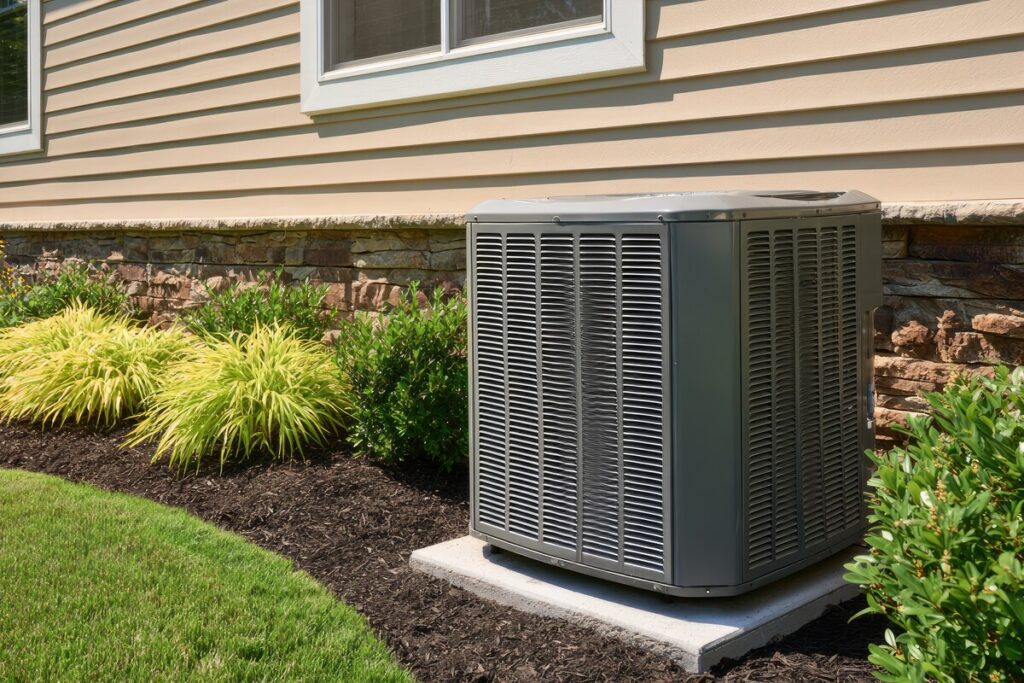
After a big fall windstorm, most of us check the roof, the fence and maybe the gutters. Almost nobody walks around to the heat pump. But that boxy unit in the side yard can collect a carpet of leaves, twigs and grit in a single gusty afternoon, and that little pile is enough to make your heating system work a lot harder than it should.
The tricky part is that nothing looks wrong from inside. The system kicks on, the fan spins, warm air comes out of the vents. Meanwhile the outdoor unit is struggling, and you only find out when the electric bill shows up or, worse, when it quits on the coldest night of the year.
Why a few leaves are a bigger deal than they look
An air source heat pump runs on outdoor air, plain and simple. The fan pulls air across a coil (that grid of thin metal fins on the sides of the unit), and the system pulls heat out of that air to bring it indoors. For that to work well, air has to move freely across the whole surface of those fins.
When wet leaves get plastered against the coil, part of that surface is basically switched off. Less air gets through, so the unit captures less heat. To make up for it, the compressor has to run longer to reach the temperature you set on the thermostat. More run time means more electricity and more wear on the parts, with no warning light to tell you anything is off. Leave it long enough and that extra strain can set you up for a breakdown right in the middle of winter.
That is why the general advice from energy-saving guides and installers is the same: keep the area around the outdoor unit completely clear and clean it regularly.
Signs your heat pump is starving for air
The obvious one is a pile of leaves stuck to the side grille. But it does not take a big drift. Even a thin ring of debris around the base of the unit can block enough airflow to matter. Leaves can also wedge themselves between the fins or slip down behind the fan.
Inside the house, a blocked unit can show up as:
- Heating cycles that run noticeably longer than usual
- Air from the vents that feels less warm than it normally does
- Rooms that take forever to reach the temperature on the thermostat
- A fan that sounds like it is straining, rattling or vibrating (a stuck leaf will do that)
Once real cold sets in, keep an eye out for unusually thick frost or ice building up on the outdoor coil. A little frost is normal and the system defrosts itself, but a heavy coating that hangs around is a red flag that air is not moving the way it should.
What to do after every windy day
Around here, the fix has become part of my post-storm routine, and it honestly takes five minutes. Walk all the way around the unit and look at the ground, the back and both sides, not just the side you can see from the house.
If you need to reach in anywhere near the fan, turn the power off first. Most outdoor units have a disconnect box mounted on the wall nearby, and you can also flip the breaker. Then put on a pair of work gloves and get to it:
- Pick up the leaves, twigs and debris by hand from around the unit, underneath it and off the grilles
- Gently lift out anything caught between the fins without bending them
- Check that nothing is crowding the sides, like patio furniture, a stack of firewood, a trash can or a big planter
Skip the pressure washer. A strong jet of water can bend those thin aluminum fins flat, and bent fins block airflow just like the leaves did. A gentle hand (and at most a soft brush) is all you need.
Give it room to breathe
Manufacturers generally recommend leaving roughly 12 to 20 inches of open space around the outdoor unit, and installation guidelines aim for the same thing: plenty of free air on every side. If you have shrubs creeping in, trim them back.
For a deeper cleaning of the coil and a full checkup, have an HVAC pro come out every couple of years.
The quick walk-around after each windy day is the part that makes the difference. Make it a habit this fall and your heat pump keeps running the way it was designed to, without quietly burning extra electricity all season long.