By the end of summer, our backyard always looks like it lost a fight: yellow patches, thin spots by the swing set, and a sad pale circle where the kiddie pool sat for three months. The good news is you do not have to rip the whole thing out and start from scratch. Overseeding lets you thicken up the grass you already have, and fall is the perfect time to do it.
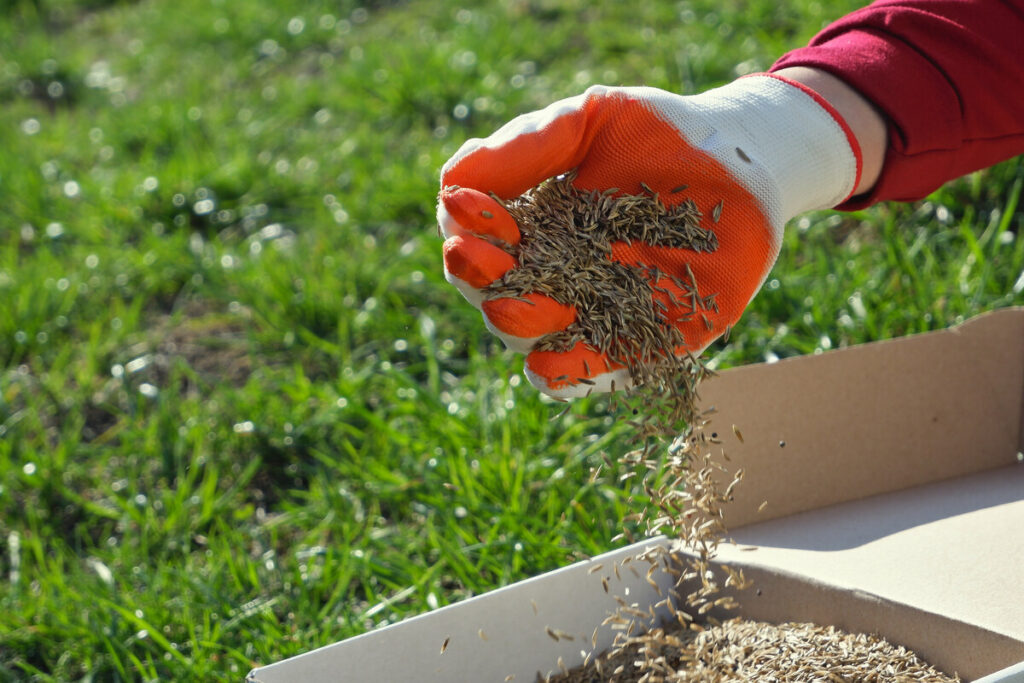
The idea is simple. You spread fresh grass seed right into your existing lawn so the new blades fill in the gaps and make the whole thing denser. It costs a fraction of a full reseed or new sod, and it takes a weekend instead of a whole season. That said, there are a few details that make the difference between a lush lawn next spring and a bag of seed the birds enjoyed. Most of the success actually happens before you even open the bag.
First, take a good look at your soil
Before you buy anything, check what is going on under the grass. If your lawn is mostly healthy and just a little thin, the soil should still feel soft and soak up water easily. That is the easy scenario.
Now think about that yellow ring left behind by a pool, a trampoline or the spot where everybody cuts across the yard. If water from the hose seems to run off instead of sinking in, the ground is probably compacted. The grass under there was starved of light, air and rain, it turned yellow and died, and the dirt got packed down as hard as a patio. Throwing seed on compacted soil is basically throwing money away, because the roots have nowhere to go.
Here is how to fix it first:
- Loosen packed spots about 4 to 6 inches deep with a garden fork. Push it into the ground every few inches and rock it back gently, without flipping the clumps over.
- Dethatch an older lawn if it is covered in a spongy layer of dead grass or moss. A dethatcher (you can rent one at most hardware stores) opens up the surface so seed can reach the soil.
- Feed tired soil if it looks poor. A simple soil test will tell you what is missing, and a very thin layer of fine topsoil or compost, about 1/4 inch, helps everything get going again.
Pick the right season for your grass
Timing matters more than most people think. If you have a cool-season lawn (think fescue, Kentucky bluegrass or ryegrass, common across the northern half of the country), early fall is your sweet spot. The soil is still warm from summer, the air is cooler and the mornings are damp, which is exactly what young grass loves.
Warm-season grasses like Bermuda or zoysia are a different story. Those are better overseeded in late spring, when they are ready to grow.
Mow low and clear the clippings
Once the soil is ready, the prep is the same whether your lawn is thriving or struggling. Mow shorter than usual, around 1.5 to 2 inches, and rake up or bag every clipping. That short cut lets sunlight reach the ground and keeps the new seed from getting stuck on top of a mat of grass, where it would just dry out.
Spread the seed evenly
For a quick fix, perennial ryegrass is a popular choice because it sprouts fast, often in 5 to 10 days if the soil is still mild. Plan on roughly 6 to 8 pounds of seed per 1,000 square feet, and check the bag in case your blend recommends something different.
Try to spread it as evenly as you can. A broadcast or drop spreader set to the right rate does a much better job than tossing handfuls (I learned that one the hard way). Then rake very lightly so the seed is touching the soil. That seed-to-soil contact is what gets it to sprout.
Water, feed and keep off the grass
Right after seeding, apply a starter fertilizer to help the baby grass settle in. Then water lightly once or twice a day so the soil stays moist but never soggy. Early morning or evening is best. And as much as possible, keep the kids and the dog off it for a few weeks, which around here is honestly the hardest part.
Once the new grass is up, a quick-release nitrogen fertilizer about five weeks later, and again six weeks after that, will help it thicken up and stay strong.
The one mistake to avoid
Do not use a pre-emergent weed killer (the kind that stops crabgrass before it sprouts) before you overseed. It cannot tell the difference between weed seeds and grass seed, so it will keep your new grass from ever coming up. If you have already put some down this season, read the label to see how long you need to wait before seeding.
Give it a few weekends of attention this fall, and next spring you might actually want to walk around barefoot out there again.