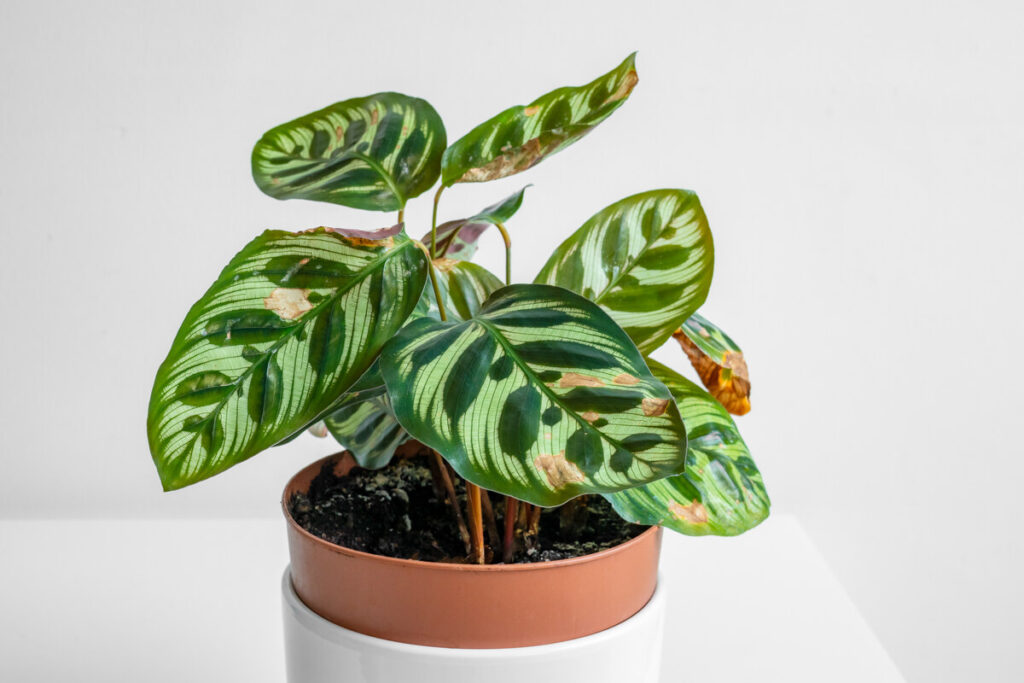
If your calathea has leaves that are going yellow in the middle and crispy brown along the edges, you are not looking at one problem. You are looking at two. The yellow is coming from the roots, and the brown is coming from the air in your house and the water in your watering can.
Around here, the calathea starts sulking every fall, right when the heat kicks on. Once you know how to read the leaves, though, the fix is pretty simple.
The quick version
- Soft leaves with an even, washed-out yellow: the soil is staying soggy and the roots cannot breathe.
- Dry, crispy, clearly outlined brown tips and edges: the air is too dry, the water is too hard, or fertilizer salts have built up.
- Fix the roots first (that is what can kill the plant), then fix the room (that is what makes it ugly).
- Brown spots will never turn green again. The real test is the next new leaf.
Yellow all over the leaf means the roots need air
When potting soil stays wet all the time, the tiny air pockets in it fill up with water. The fine feeder roots basically suffocate, start to rot and stop sending water and nutrients up to the leaves. The lowest leaves go first, fading slowly and evenly and turning limp.
Push your finger roughly an inch into the soil. If it comes out cold, sticky and coated in damp dirt, skip watering. Calatheas like slightly moist soil, never soaking wet, so wait until the top half inch to inch feels dry.
Then look at the sneaky culprit nobody checks: the saucer. Even a little puddle left sitting under the pot, or a decorative cover pot with no drainage hole, keeps the root ball sitting in water around the clock.
Fall makes this worse: the plant slows down and the soil dries more slowly, but most of us keep watering on the summer schedule.
Give it one to two weeks for the yellowing to stop spreading and three to six weeks for a healthy new leaf to show up. If the soil smells sour and the roots are brown and mushy, unpot it, trim the rotten roots and repot in fresh, airy mix.
Brown edges come from the air and the tap water
Two causes stack up here. First, dry air: in a heated house, the leaves lose moisture faster than the roots can replace it, and the cells along the edges, the ones farthest from the veins, dry out first. Comfortable indoor humidity sits between 40 and 60 percent, and a heated living room often drops below 40. For a tropical forest floor plant, that is a desert.
Second, the water. The plant does not use up the minerals and fluoride in hard tap water. The water evaporates, the salts build up in the soil, burn the fine roots and travel to the leaf tips. That is why you get those neat, sharply outlined brown edges, sometimes with a thin yellow line around them. Letting tap water sit out overnight does not fix this, since only the chlorine evaporates.
Check how hard your local water is first (your water utility usually publishes it). If it is hard, a filtering pitcher, a jug of distilled water or rainwater if you have a way to collect it all work well.
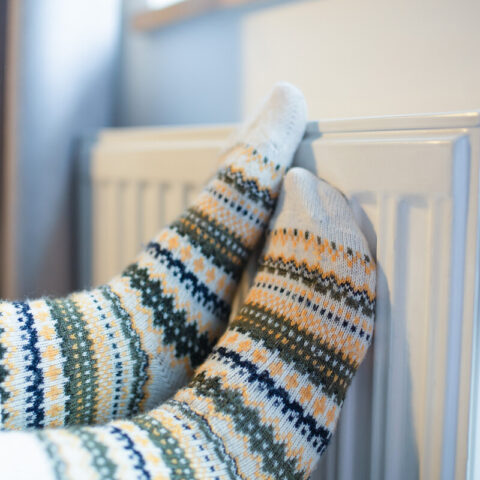
Skip daily misting: it helps for a few minutes, and water sitting on the leaves can cause soft brown spots. Instead, set the pot on a tray of damp pebbles or clay balls (sitting on top, not in the water) and keep it about three feet away from heat vents and radiators.
A few extra tips that help
- An inexpensive hygrometer settles the question fast: if it reads under 40 percent, the air is your problem.
- Stop fertilizing from November through February, and flush the soil once with soft water to rinse out built-up salts.
- One or two bottom leaves slowly yellowing on an otherwise healthy plant is just normal aging.
- Bright, washed-out patches that turn brown usually mean direct sun is hitting the leaves. Move the plant back a few feet or use a sheer curtain.
When a leaf has both, here is the order to work in
Start at the bottom. Empty the saucer, do the finger test and space out your watering. This is the one change that helps both symptoms, because the right amount of soft water fixes the soggy roots and the salt buildup at the same time.
The room comes next, and it pays off faster: away from the heat and on its pebble tray, the curled leaves often open back up within hours. Its cousin the prayer plant reacts exactly the same way.
As for edges that are already brown and crunchy, they are done for good. Trim them with clean scissors along the natural shape of the leaf, leaving a thin dry line so you do not cut into healthy tissue. If the next leaf unrolls without brown edges, you have solved it.