You know the feeling: you wipe the stovetop, and your fingers still stick to it. When a kitchen gets cooked in every single day, grease builds into a tacky film that regular spray cleaners barely touch. The good news is that one of the best fixes is an old-fashioned mix you can stir up in a bucket with two basic ingredients and a kettle of hot water.
Around here, the range hood is the place where grease likes to hide, and I would rather not haul out a heavy-duty degreaser with a smell that clears the room. This homemade cleaner is gentle on the nose, cheap to make, and surprisingly strong on cooked-on gunk.
Why washing soda works so well on grease
Washing soda (sodium carbonate) is not the same thing as baking soda, even though they sit close together on the shelf. It is a much stronger alkaline cleaner, and alkaline cleaners are exactly what break down fats and oils. You can usually find it in the laundry aisle, sold as a laundry booster.
On its own, washing soda loosens grease. Pair it with a liquid soap, such as liquid castile soap or a traditional liquid black soap, and the soap helps lift that loosened grease off the surface so you can wipe it away. Together they make a concentrated, all-purpose degreaser for the toughest spots in the kitchen.
The recipe for a very greasy kitchen
The mix most often recommended is simple:
- 2 tablespoons of washing soda
- 1 teaspoon of liquid castile or black soap
- About 1 quart of very hot water
Put the washing soda in a bucket or a large bowl, add the soap, then pour in water that is close to boiling and stir for a few seconds. The heat matters: it dissolves the crystals fully and softens the grease, which makes the whole mix work harder. Some people keep the same ingredients in the same amount of hot water as a general household cleaner, and the idea stays the same either way.
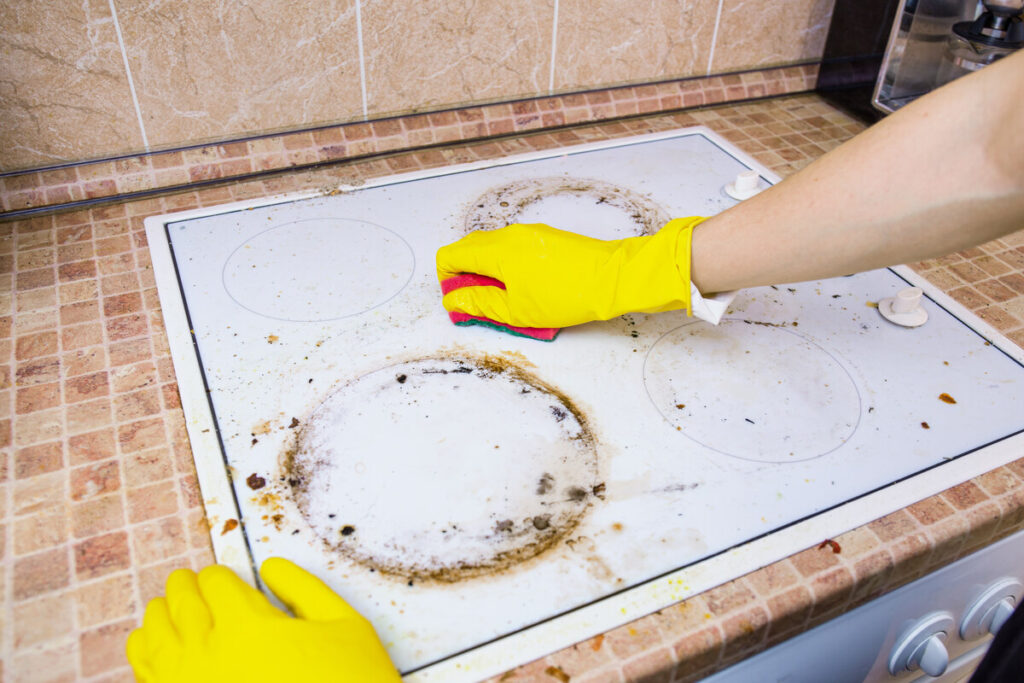
How to clean a greasy stovetop or counter
Before you start, put on household gloves, because washing soda can irritate your skin, and open a window or turn on a fan.
- Let the cooktop cool down until it is cold or just barely warm.
- Dip a non-scratch sponge in the solution and wring it out a little.
- Wipe the surface. On baked-on grease, leave the solution sitting for a few minutes so it can loosen the buildup.
- Scrub gently, then rinse well with clean water, especially anywhere food touches directly.
How to tackle the range hood and its filters
Same mixture, slightly different routine. Start by unplugging the hood or switching off its breaker. Wash the outside and the edges with your sponge, paying extra attention to the underside, which is usually the greasiest part. Finish with a damp cloth to rinse.
For stainless steel mesh filters, a soak works wonders. Set the filter in a sink or tub filled with the hot solution for 15 to 30 minutes, brush it gently, then rinse it thoroughly. Skip this method on aluminum filters, since washing soda can stain or darken aluminum. For those, stick with hot water and dish soap.
Where to use it and where to avoid it
Keep this cleaner for tough surfaces like stainless steel, enamel, ceramic wall tile and glass cooktops (unless your manufacturer says otherwise). If you want to use it on painted cabinets, laminate or anything delicate, test a small hidden spot first.
A few more things worth knowing:
- It will not remove hard water deposits. Mineral buildup needs something acidic, like white vinegar.
- Never mix this solution, or any soap based cleaner, with bleach. Combining cleaning products can release harmful fumes.
- Do not boost the amount of washing soda thinking it will clean better. Too much can leave a white haze or a slightly sticky surface, especially if you do not rinse well.
What to do when the grease will not budge
If you see a whitish film after cleaning, it almost always comes from using too much washing soda or not rinsing enough. Wipe the area again with plain water and dry it with a clean towel.
For grease that is really caked on, resist the urge to make the mix stronger. Instead, apply the same solution a second time and give it a little more time to sit, then help it along with a soft brush. A couple of patient rounds will do more than one harsh scrub, and your stovetop will finally feel smooth again instead of sticky.