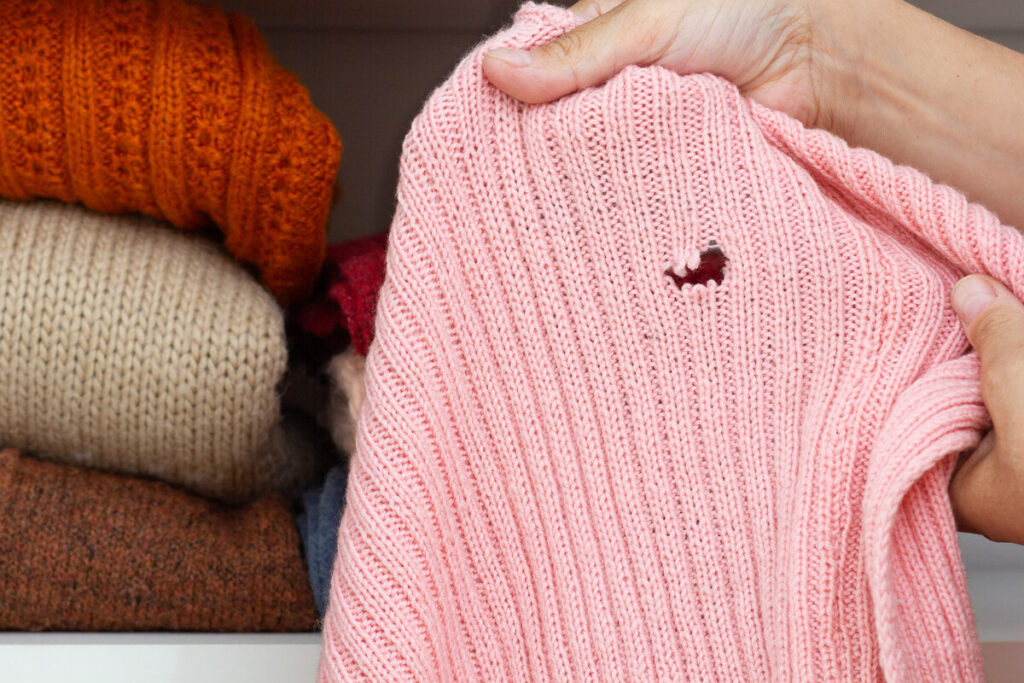
There is nothing quite like pulling out your coziest wool sweater on the first chilly morning of fall, only to find a sprinkle of tiny holes around the collar and cuffs. The good news: if you catch the signs early and follow a simple plan, you can stop them long before the damage gets serious.
Know what you are actually dealing with
First, these are not the little moths that sometimes turn up in a bag of flour in the pantry. Clothes moths are a different pest, and they go after animal fibers: wool, cashmere, silk, feathers, fur and down. They love dark closets nobody disturbs.
Here is the part that surprises most people: the adult moths are not the ones eating your sweaters. The small beige or speckled brown adults (about half an inch long) are mostly there to lay eggs. The damage comes from their creamy white larvae, which hide in folds, seams and linings and feed on the keratin in natural fibers.
Plain cotton does not interest them much, unless it is blended with wool or left dirty. Food spots and sweat make any piece of clothing far more appealing, which is why putting clothes away unwashed is one of the biggest invitations you can send. The eggs often hitch a ride on secondhand clothing or rugs, but they can also come in through an open window or from an old bird nest in a chimney.
Early signs to watch for
- Spots where the fabric looks thinner than the rest
- Small broken threads or a fuzzy, nibbled surface
- Tiny silky tunnels or webbing in folds and seams
- Little cream colored larvae that curl up when you move them
- Small beige moths fluttering out every time you open the closet door
A single female can lay anywhere from 50 to 200 eggs, so a few moths can turn into a real problem quickly. And while you are checking the closet, look over wool rugs, throws and blankets too, since they often turn into backup hideouts.
How to clear moths out of your closet
At the first hint of trouble, empty the whole closet. Take every piece out, give it a good shake outside if you can, and seal anything at risk (wool, silk, down and blends) in airtight bags. Badly damaged items can go straight in the trash, tied up tight so nothing escapes. Everything else needs to be treated before it goes back in.
- Treat the clothes. Freeze them at 0°F for 3 to 7 days (up to two weeks for thick, heavy pieces), or wash them for at least 20 to 30 minutes at around 120°F if the care label allows it. Delicate items are best sent to the dry cleaner.
- Vacuum like you mean it. Floor, baseboards, cracks, the underside of shelves and any vents. Empty the bag or canister outside right away.
- Wash every surface. Wipe down shelves, walls and baseboards with warm soapy water. If the closet is carpeted, steam clean it or call in a pro.
- Check the neighbors. Treat wool rugs, blankets, cushions and the space under nearby furniture too.
- Set one or two pheromone traps. They mostly catch the males and tell you whether there is still activity.
After freezing, let the clothes come back to room temperature inside their sealed bag so condensation does not form on the wool or cashmere. Only put things back once they are clean and completely dry, ideally in zippered garment bags or airtight storage bins.
Keep them from coming back
Once the closet is clean, prevention really comes down to small habits. Around here, the closet door gets opened and aired out regularly, and I try not to cram everything in so tight that nothing can breathe. Moving your coats and sweaters around about once a month is enough to disturb any larvae trying to settle in.
Keep the vacuum running along baseboards, into dark corners and under furniture, where dust and pet hair pile up. Before storing anything for the season, wash it or have it cleaned, then pack it into sealed bags or bins.
Cedar, lavender and pheromone traps
Cedar rings, blocks or shavings and dried lavender can make a closet less appealing, but they do not kill larvae. The scent fades over time too, so refresh them whenever you can no longer smell them. Pheromone traps work more like an early warning system: if you are catching a lot of moths, there is still a problem somewhere.
A word on mothballs
Traditional mothballs, including those made with paradichlorobenzene, should only be used inside a fully sealed container with the clothes, so the fumes do not drift into the room. They are toxic to kids and pets, and anything stored with them needs a wash before you wear it again.
For most homes, regular cleaning and smart storage are all it takes.