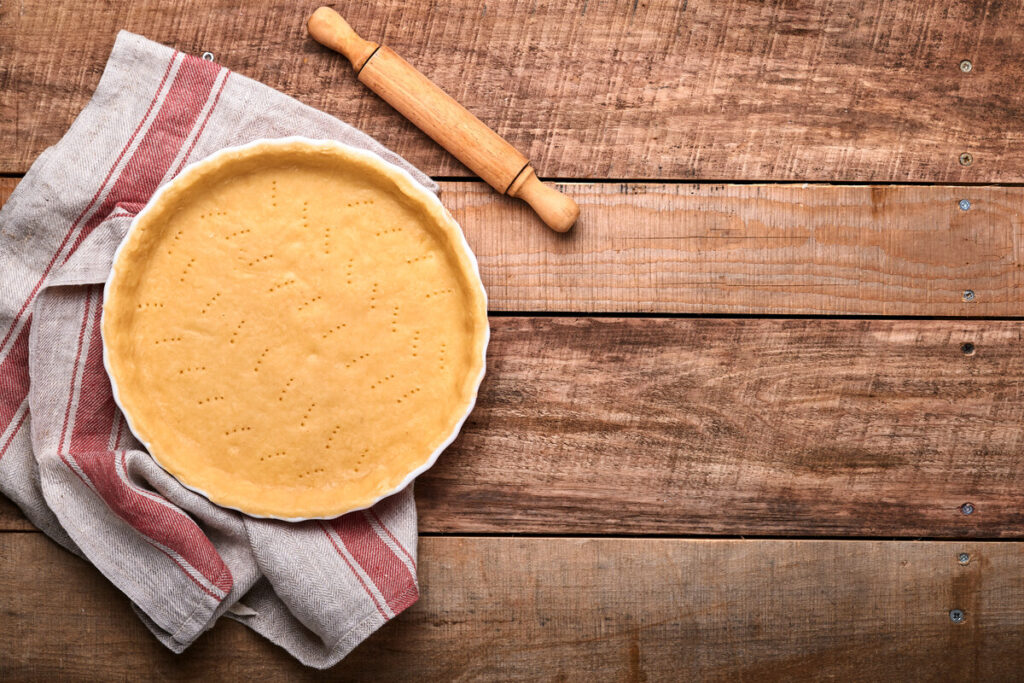
You rolled out the dough, fluted the edges, poked it all over with a fork so it would not puff up… and now you are standing there wondering if it needs to go in the oven empty first. Good news: there is one easy question that settles it every single time.
Around here, pie season and quiche-for-dinner season overlap pretty heavily. If you have ever treated blind baking like a coin toss, you know how it goes: sometimes a gorgeous flaky crust, sometimes a pale, soggy bottom that nobody mentions but everybody notices. So let me save you the guesswork.
The one question to ask before you fill your crust
Blind baking simply means baking the crust on its own, before the filling goes in. Whether you need it comes down to two things: will the filling be cooked in the crust, and does it release a lot of moisture?
Always blind bake when the filling never sees the oven
If your filling is already cooked or meant to stay raw, the crust has to be fully baked ahead of time, because it will not get another chance. Think fresh strawberry pie, a lemon tart, or any pie filled with pastry cream or pudding. Nothing goes back in the oven, so an unbaked crust would just stay raw dough.
Blind bake when the filling is juicy or wet
Then there is the in-between group: fillings that do bake in the crust, but bring a lot of liquid with them. Peaches are the classic example. They let go of so much juice that an unbaked crust underneath soaks it right up and turns soft. The same goes for quiche and other egg-and-cream fillings, which can leave the bottom damp and heavy if the dough goes in raw. For juicy fruit and custardy savory fillings, a quick pre-bake is worth the extra ten minutes.
How to blind bake a crust without it puffing up
This part is easier than it sounds:
- Prick the bottom of the dough all over with a fork.
- Line it with parchment paper and fill it with something heavy so it stays flat: pie weights, dried beans or even uncooked rice all work.
- Bake it at about 350°F for roughly 10 minutes.
- Lift out the paper and weights, then add your filling and keep going with your recipe.
One little trick I love for keeping the bottom crisp: after that first bake, brush the inside of the crust with a bit of beaten egg white and pop it back in the oven for a few minutes. The egg white sets into a thin, invisible layer that acts like a raincoat between the crust and a wet filling.
When you can skip the pre-bake
Not every pie needs the extra step. If your fruit stays fairly dry as it bakes, you can fill the raw crust and go straight into the oven. Apples are the perfect example. Blind baking an apple pie crust is not just unnecessary, it can actually backfire: baking the dough twice tends to leave it dry and a little tough instead of tender and flaky.
Short on time with juicy fruit? Try this shortcut
Maybe you have a pile of ripe plums or peaches and zero patience for an extra bake (no judgment, I have been there on a busy weeknight). Instead of pre-baking, sprinkle a thin layer of something dry and absorbent over the bottom of the raw crust before adding the fruit. Almond flour works beautifully, and so do crushed cookies or graham crackers. That layer catches the extra juice before it reaches the dough, and it adds a nice bit of flavor too.
The quick cheat sheet
- No-bake or fresh fruit filling (strawberry, lemon, pastry cream): fully blind bake.
- Juicy fruit (peaches, plums): blind bake, or use the almond flour or crushed cookie trick.
- Quiche and custard-style savory pies: a short pre-bake helps a lot.
- Apples and other drier fruit: skip it and fill the raw crust.
Keep that list handy this fall and the soggy bottom days are officially behind you.