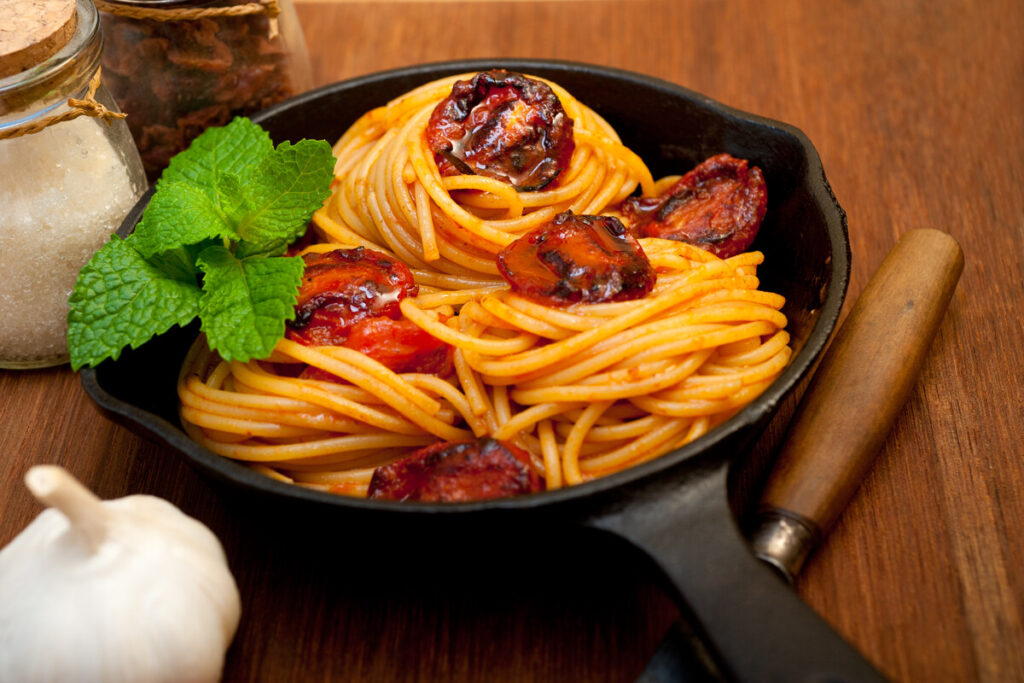
What if the best spaghetti you make this year never touches a pot of boiling water? This southern Italian skillet method cooks dry pasta straight in the sauce until it soaks up every bit of flavor and turns golden and a little crunchy in spots.
Around here, tomato sauce pasta is the dinner I can make half asleep, which also means it gets a little boring. This version shakes things up without asking for anything new from the grocery store. The dish is called spaghetti all’assassina, and it comes from Bari, down in the heel of Italy’s boot. The name translates loosely to “the assassin’s spaghetti,” probably a nod to the heat from the chili and the way the noodles get almost scorched in the pan. Don’t let that scare you. It is really just pasta with personality.
Why cooking spaghetti in the skillet works
The whole trick is in how the pasta cooks. Instead of boiling the noodles and tossing them with sauce at the end, you lay the raw spaghetti right in a hot skillet and feed it sauce and a splash of water little by little. As the minutes go by, the pasta drinks up the liquid, the flavors concentrate, and the strands that touch the bottom of the pan pick up toasty, browned edges.
You end up with pasta that is soft and saucy in some bites and slightly crispy and grilled in others. It is the same reason the crusty corner piece of a lasagna is everyone’s favorite.
The one rule to remember: don’t stir too often. The pasta needs a little time sitting against the hot pan to catch and brown. If you keep moving it around, you just get regular spaghetti in sauce.
What you need for two servings
- 7 oz dry spaghetti (about half of a standard 1 lb box)
- 1 jar of good tomato sauce (a tomato and mozzarella or tomato basil sauce is ideal)
- About 1/3 to 1/2 cup water
- 2 garlic cloves, minced
- 2 big pinches of red pepper flakes or a mild ground chili
- 2 tablespoons olive oil
- Salt, only if needed
- Fresh basil, for serving (optional)
A quick note on the sauce: the mozzarella version brings a mellow, creamy side that balances the bright tomato and the chili. If you can only find a plain marinara, it still works great. A few torn pieces of fresh mozzarella over the top right before serving gets you close to the same effect.
How to make spaghetti all’assassina
- Pick the right pan. Use a large skillet, at least 11 inches across, so the spaghetti can lie flat without being broken. A heavy skillet that holds heat well is your friend here.
- Wake up the aromatics. Warm the olive oil over medium heat with the minced garlic and the chili for just a few moments, until it smells amazing but before the garlic browns.
- Start the sauce. Pour in part of the jar of sauce and let it reduce slightly until it begins to bubble gently.
- Add the pasta raw. Lay the dry spaghetti right on top of the sauce. No breaking, no precooking.
- Let it catch. Leave the noodles alone so they soak up some sauce and start to toast against the pan, then gently flip them over.
- Feed it slowly. Add the rest of the sauce a little at a time, turning the pasta several times so it absorbs the liquid and picks up a light golden color.
- Finish with water. Pour in the water, cover the pan, and keep cooking over medium low heat, turning the pasta gently now and then, until the spaghetti is cooked through and coated in sauce. Taste a strand to check, and add a pinch of salt only if it needs it.
Tips for the best crispy skillet pasta
Add liquid gradually. It is much easier to control the texture when you add sauce and water in small amounts rather than dumping everything in at once. If the pan looks dry and the pasta is still firm, add another splash of water.
Garlic, chili and basil are the classic partners for this dish. Keep the chili gentle if you are feeding little ones, and pass extra flakes at the table for the grown ups who want more heat.
Serve it right away. The contrast between the crunchy, toasty bits and the soft, saucy strands is the whole point, and it fades as the pasta sits. This is a straight from the skillet to the plate kind of dinner.
Can you really cook pasta in a skillet?
Absolutely. It feels a little wrong the first time, but cooking pasta in the pan while adding liquid gradually is exactly what makes this dish special. The spaghetti absorbs the tomato flavor as it cooks instead of just getting a coat of sauce at the end, and it develops those slightly crispy, grilled notes you will never get from a pot of boiling water.
Why do tomato and mozzarella go so well together? The tomato brings a fruity, tangy brightness, and the mozzarella softens everything with its creamy texture. That balance between bold and mellow is behind so many Italian classics, from caprese salad to margherita pizza, and it is a big part of why this simple skillet spaghetti tastes like way more effort than it actually is.