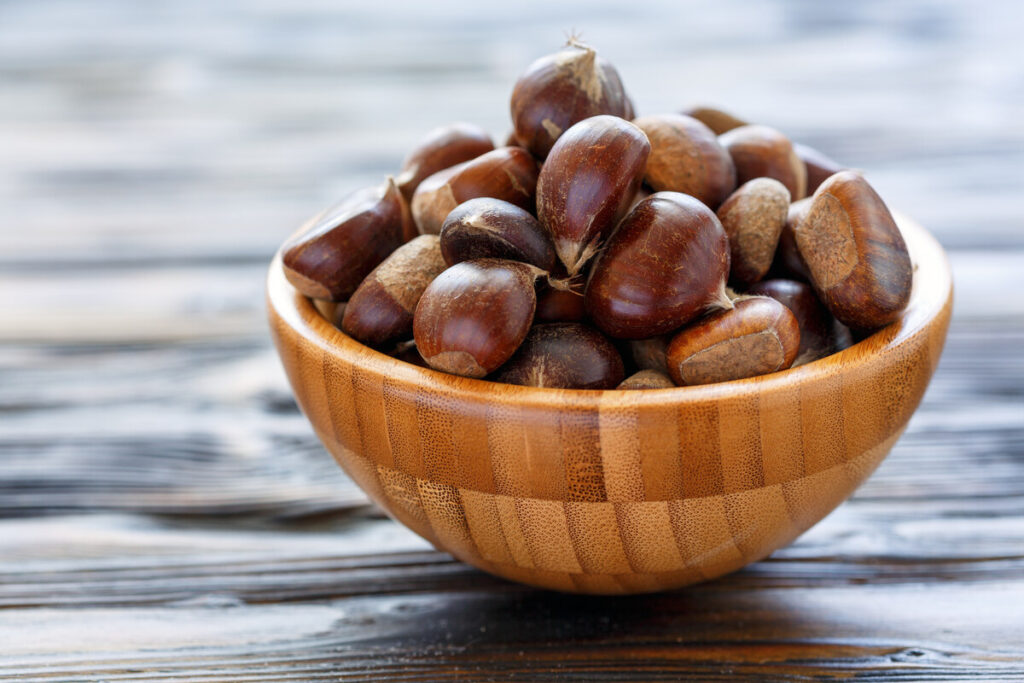
Fresh chestnuts are one of the best parts of fall, but they spoil a lot faster than most people expect. Unlike walnuts or almonds, they are full of moisture, so a bag left on the counter can turn moldy, dried out or wormy in just a few days. The good news is that keeping them fresh for weeks or even months takes almost no effort once you know the tricks.
Whether you picked them up at the farmers market, grabbed a big bag at the grocery store or gathered them yourself, here is how to sort them, store them and roast them so none go to waste.
Start with the float test
Before you store a single chestnut, sort the good ones from the bad. Fill a large bowl with cold water and tip the chestnuts in. Any chestnut that floats goes straight in the trash, because it usually means the flesh inside has dried out, rotted or been hollowed out by a worm. The ones that sink to the bottom are the keepers.
If you gathered your own, remove the spiky outer husks first (gloves help a lot here) and do this sorting within a few hours of bringing them home.
Keep them fresh with a daily water soak
This old-fashioned method is great when you want to eat your chestnuts over the next week or so. After the float test, leave the good chestnuts in the bowl with about one and a half times as much water as chestnuts (roughly 3 cups of water for every 2 cups of chestnuts).
- Change the water every single day.
- You can keep them soaking like this for up to 9 days.
- Drain them a few hours before you plan to cook them, then keep them somewhere cool with good air flow until you are ready.
Around here, a bowl on the coolest corner of the kitchen counter does the job, as long as I actually remember to change that water every morning.
Freeze them for the rest of winter
If you want chestnuts for holiday stuffing, soups or a cozy snack in January, the freezer is your best friend. You have two options.
Freezing them in the shell
Use a small sharp knife to cut a slit in the rounded side of each shell, then put them straight into a freezer bag. If you plan to roast them later, there is no need to thaw them first; they go right from the freezer onto the baking sheet.
Freezing them peeled
Do the float test first and toss any floaters. Cut a slit in the rounded side of each shell, put the chestnuts in a saucepan of water and bring it to a boil for 5 minutes. Drain them, peel off the shell and the thin skin underneath while they are still warm, then let them cool completely. Once they are fully cold, pack them into freezer bags, press out the air and freeze.
Peeled frozen chestnuts are such a time saver. Toss them into a pan with butter, add them to stuffing or simmer them into soup without any peeling on a busy night.
What about a cool shed or garage
You will sometimes hear about keeping chestnuts in a cool, airy spot like a garage or shed. It can work in a pinch, but the results depend a lot on the weather and the humidity, and they will not last nearly as long. Soaking or freezing is much more reliable.
How to roast fresh chestnuts in the oven
Once your chestnuts are stored, roasting them is the easiest way to enjoy them. This makes enough for about 4 people as a snack.
- You need: about 1 pound of fresh chestnuts.
- Prep time: 5 minutes. Cook time: 20 to 30 minutes.
- Preheat the oven to 410°F.
- Soak the chestnuts in a bowl of water and throw out any that float. Drain the rest.
- Cut an X into the shell of each chestnut with a paring knife. This keeps them from bursting and makes peeling much easier.
- Spread them out in a single layer on a baking sheet lined with parchment paper.
- Roast for 20 to 30 minutes, until the shells curl back where you cut them.
- Let them cool just until you can handle them, then peel and eat them while they are still warm.
Warm roasted chestnuts make a great after-school snack on a chilly afternoon, and they are just as good chopped into a side dish for a fall dinner. With a bowl of water and a little freezer space, you can keep enjoying them well past the first frost.