If your casseroles never get that gooey, stretchy pull, the problem may not be your oven at all. It may be the bag of pre-shredded cheese in your cart.
I get the appeal. A bag of shredded cheddar or mozzarella lives in my fridge too, because on a busy night, tossing a few handfuls over a dish feels like a small victory. Baked mac and cheese, lasagna, a pan of loaded potatoes, a grilled cheese that is supposed to ooze: all of them lean on cheese that melts well. And yet, every so often, the cheese comes out of the oven a little clumpy, a little dull, and nowhere near as silky as you pictured.
The culprit hiding in the bag
Many manufacturers add anti-caking agents to shredded cheese so the strands stay loose instead of fusing into one big lump inside the package. One common choice is cellulose, a plant-based fiber. It works by coating each little strand with a very fine layer of powder.
That coating is great for pouring cheese out of a bag. It is not so great when you want the cheese to flow together under heat. The thin film can get in the way of a smooth melt, which is why a bagged blend sometimes gives you a drier, patchier top layer than you expected.
The simple fix: buy a block and shred it yourself
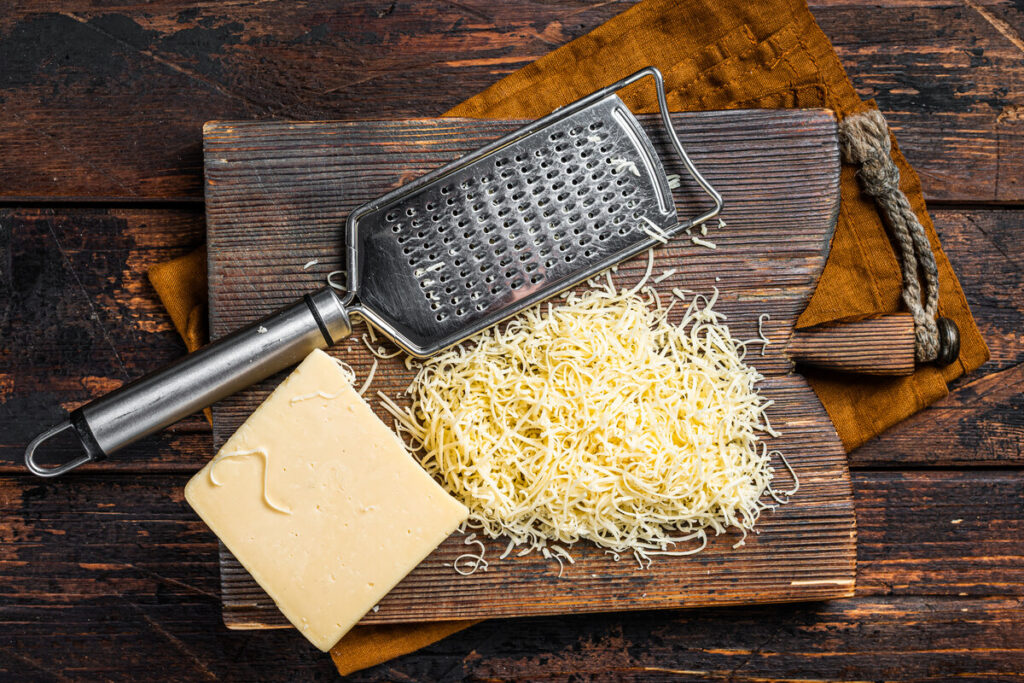
The easiest way to get a better melt is to go back to basics. Buy the cheese in a block and shred it right before you use it. It takes a couple of minutes, and the difference shows up in everything from a cheesy pasta bake to a pile of nachos.
Here is where it helps most:
- Baked pasta and casseroles: fresh-shredded cheese blends into the sauce and browns more evenly.
- Grilled cheese and melts: you get that long, stretchy pull everyone wants.
- Tacos, quesadillas and nachos: the cheese drapes over the filling instead of sitting on top in separate strands.
- Cheese sauces: freshly shredded cheese stirs into a sauce far more smoothly.
It does not have to cost more
Many people assume doing it yourself is the pricey route. Often it is the opposite. Per ounce, a block of cheese can come out cheaper than the same cheese already shredded, so you may even save a little at checkout.
A block also gives you options a bag never will. You can shave it into curls over pasta, slice it for sandwiches, or grate it into a fine snowy pile to melt into a sauce. One piece of cheese, a handful of different jobs.
Make the shredding painless
Nobody wants a new chore on a weeknight, so keep it easy:
- Use a box grater on the large holes, or a food processor with a shredding disc if you are doing a big batch.
- Shred the cheese when it is cold from the fridge. Firmer cheese grates cleanly and does not smear.
- Do not crank the heat. Even great cheese turns greasy or tough if the oven is too hot, so bake at a moderate temperature and let it melt gently.
What if you still love the bag?
Not every bag is the same. Brands differ in what they put in them, so flip the package over and read the ingredient list. If you see an anti-caking agent and your dish keeps coming out disappointing, that is your clue.
For the dishes where melt really matters, I would reach for the block. For a quick sprinkle on a salad or a pot of chili, the bag can stay. Save the shredding for the meals where you want the cheese to be the star.