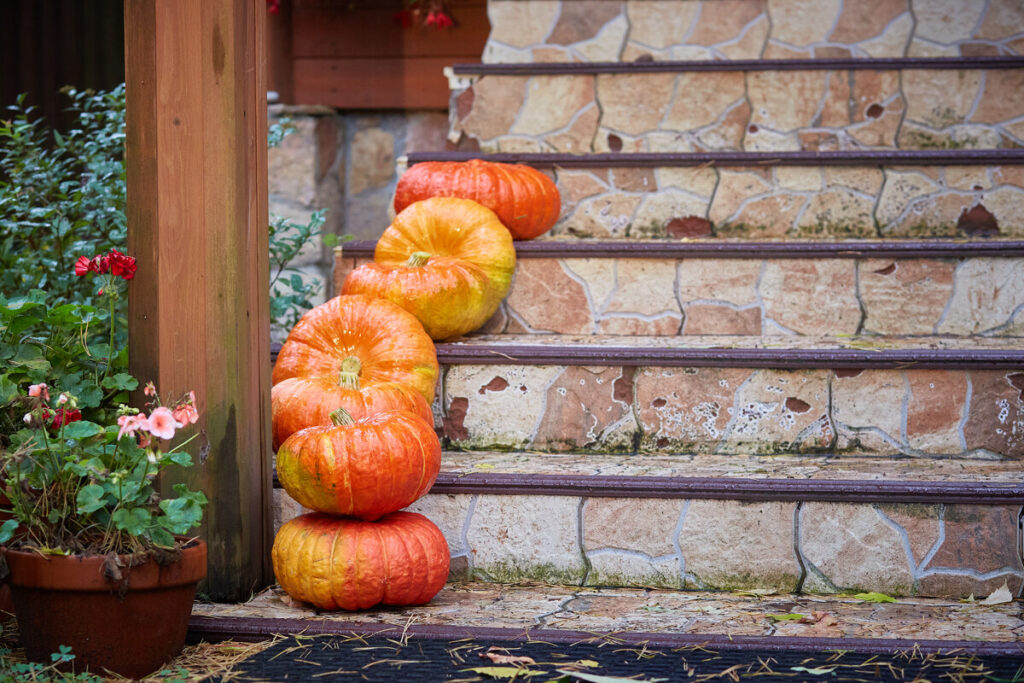
Those picture-perfect fall porches never seem to show the pumpkin that went soft by Wednesday or the stack that rolled off the steps the minute someone slammed the door. The secret is not in how you arrange them, it is in which pumpkins you bring home in the first place.
Walk into any pumpkin patch or farm stand in October and you will find dozens of shapes, colors and sizes piled together. Some of them are bred for carving, some are built for stacking and some are just meant to sit there looking gorgeous for weeks. Once you know which is which, decorating the porch stops being a guessing game. Around here, that one little shift has saved me a lot of slimy cleanup.
Pumpkin, squash or gourd: a quick refresher
Every pumpkin is a squash. “Squash” is the big family name, and pumpkins are simply members of that family with a few different species mixed in. That is why the most interesting decorating options are often labeled as squash rather than pumpkin at the farm stand. Pale, flattened, deeply ribbed varieties like the Fairytale pumpkin, or gray-green ones covered in bumps and warts, add instant texture to a front step. You do not have to carve a thing for them to look dramatic.
The best pumpkins for carving
If jack-o’-lanterns are the plan, a few varieties make the job much easier:
- Cronus: deep orange with a sturdy, curved stem and a nice wide face to draw on.
- Jack O’Lantern: the old classic, first introduced back in 1956. It stays about 10 inches tall, round and fairly light, which makes it a great pick for kids.
- Howden: a little smaller than Cronus, with a very strong stem that holds up well after carving.
- Casper: a white pumpkin with smooth, pale skin that works just as well for painting as for carving.
Whatever variety you choose, pick one that feels heavy for its size, with firm skin and no soft spots. A light pumpkin with a mushy patch near the bottom is already on its way out.
The best pumpkins for stacking
Those tall pumpkin towers you see all over social media only work with flat shapes. Round carving pumpkins tend to slide right off each other, while wide, slightly squashed varieties sit together like they were made for it.
The star of any stack is the Cinderella pumpkin. It is very flat, a rich red-orange, and makes a perfect base. It pairs beautifully with Jarrahdale, a blue-gray squash with deep ribs, and with Flat White Boer, a white, flat and even pumpkin that works as a bottom layer or a middle tier.
A few easy combinations to try:
- A Flat White Boer on the bottom, a Jarrahdale in the middle and a Cinderella on top.
- A tone-on-tone stack of two Fairytale pumpkins in different sizes.
- Any column finished off with a small carved Casper for a little glow at night.
Try to stick to three to five varieties on one porch. That keeps the look clean and pulled together instead of turning your front steps into a pumpkin collection.
Decorative pumpkins with texture and color
Not a carver? Lean on the pretty, textured ones instead. Sunshine Kabocha is a bright, sunny orange that lights up a step all by itself. Winter Luxury has a fine white netting over its skin that looks almost storybook. Turk’s Turban, with its colorful “cap,” makes a great centerpiece or focal point right by the door. Tetsukabuto, with its dark, hard shell, and the small tan Thelma Sanders round out the scene nicely.
How to make your porch pumpkins last
Choosing well is half the battle. The other half is a little prep before they ever go outside:
- Wash them. Rinse off dirt and debris with plain water.
- Give them a vinegar bath. Mix 1 part white vinegar to 10 parts water and let the pumpkins soak for 20 to 30 minutes, then let them air dry completely.
- Repeat after carving. A second dip in the same solution once your jack-o’-lantern is done helps slow down mold.
You may remember people using bleach for this. That advice has mostly fallen out of favor because of the risks to pets and the environment, and the vinegar soak does the job without the worry.
Timing matters too. An uncarved, hard-skinned squash can last several weeks outside, sometimes two or three months as long as it does not freeze, while a carved pumpkin rarely makes it past 5 to 10 days. So save the big jack-o’-lanterns for the days right before Halloween, and let the whole, decorative varieties carry your porch through the rest of the season.