The first chilly mornings always tell on my house. You walk past the front door in socks, feel that cold little breeze around your ankles, and realize the furnace is working overtime to heat the porch. The good news is that the fix costs a few dollars and takes about ten minutes.
Most homes leak warm air through gaps so small you never notice them until the weather turns. The usual suspects are the bottom of exterior doors, the door to the garage, a basement or stairwell door, and even an old mail slot. Sealing those cracks with weatherstripping is one of the cheapest energy upgrades there is, and it is a perfect weekend job for fall, before the real cold settles in.
Why a tiny gap matters so much
Weatherproofing a door simply means plugging the openings that let outside air in and inside air out. It does not sound like much, but windows and doors together are responsible for a big share of the heat a house loses. The gaps around door frames alone can account for close to a tenth of it.
Energy efficiency guides commonly estimate that adding weatherstripping and a door sweep can lower heating use by roughly 5 to 10 percent. Stack a few small upgrades like this together and the savings on heating and cooling can climb a lot higher, which makes sense when you remember that heating is often the single biggest chunk of a household energy bill.
Find the leaks first with a candle
Before you buy anything, figure out exactly where the air is sneaking in. Pick a windy day, light a candle (or an incense stick if you have little ones underfoot) and slowly move it along the edges of your doors and windows. If the flame flickers or the smoke drifts sideways, you have found a leak.
Pay special attention to:
- the bottom edge of any door that opens to the outside
- the door between the house and the garage
- doors leading to an unheated basement or stairwell
- built-in mail slots
- window frames, especially older ones
Pick the right type of weatherstripping
Once you know where the drafts are, head to the hardware store. Most weatherstripping is sold by the foot for a few dollars, and a basic door sweep usually runs somewhere between 5 and 15 dollars. Here is what you will find on the shelf:
- Foam tape: the cheapest option, best for small gaps on interior doors
- Rubber or EPDM seals: tougher and longer lasting, a good pick for exterior doors
- Silicone strips: flexible and durable, great in spots where the door rubs every time it opens
- Brush strips: ideal for sliding doors and sliding windows
- Door sweeps: rigid or flexible strips that close the gap between the bottom of the door and the floor
How to install it so it actually works
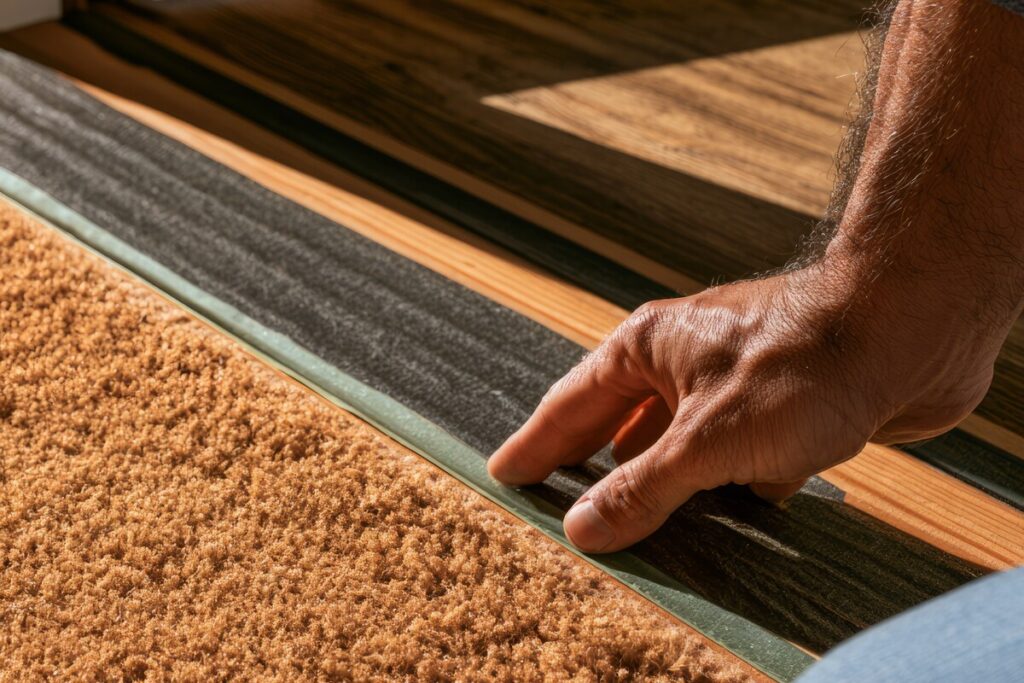
The seal is only as good as the way you put it on. Start by wiping the surface with a cloth and a bit of rubbing alcohol, then let it dry completely. Stick the strip on without stretching it, pressing firmly along the whole length so the adhesive really grabs.
For the tiny cracks around window frames, simple and cheap fixes like a bead of silicone caulk or a strip of foam do the job just fine. No need for anything fancy.
A few mistakes to avoid
Once everything is in place, open and close the door a few times. It should still shut easily without you having to shove it. Do not paint over your new seals either, because paint makes them stiff and they stop sealing properly.
And whatever you do, leave your air vents, returns and bathroom exhaust fans alone. Those need to stay clear so the air in your home stays fresh and moisture does not build up on walls and windows.
Pair it with smarter thermostat habits
Weatherstripping works even better when you are not cranking the heat. Every degree you add on the thermostat pushes your energy use up a little more, so it helps to find a comfortable middle ground. Around here, something like 66 to 70°F in the living areas during the day and 59 to 63°F in the bedrooms at night keeps everyone cozy under a good blanket.
None of these steps is life changing on its own, but together, a door sweep, a few strips of weatherstripping and a slightly lower thermostat are the kind of small, cheap habits that can shave a real chunk off your heating bill this winter. Not bad for a Saturday morning and a trip to the hardware store.