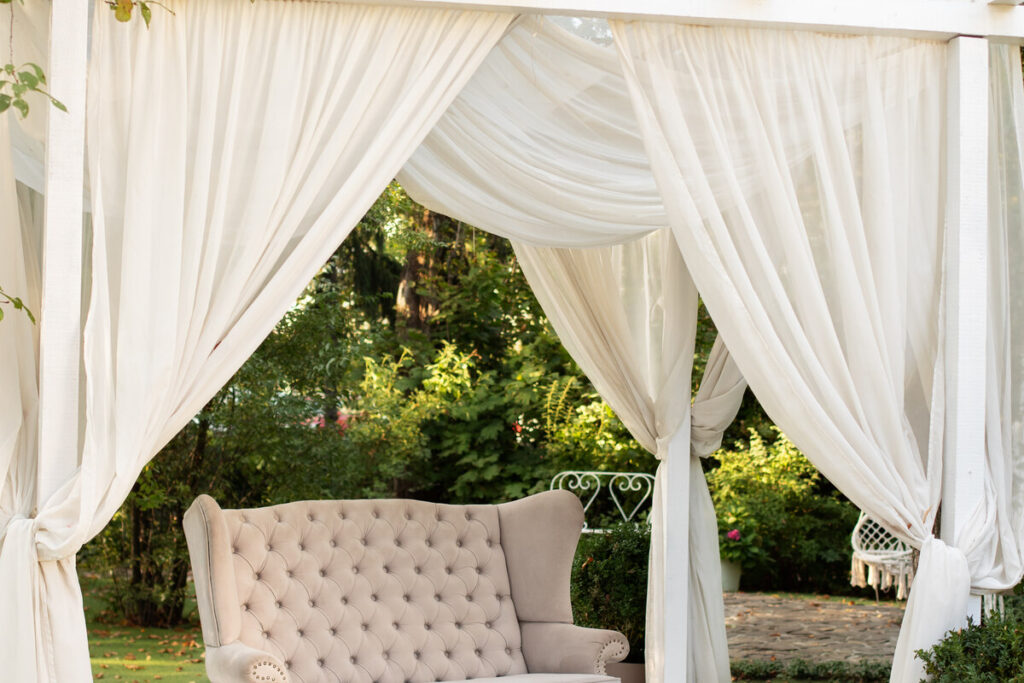
Want curtains on your patio but dread the drilling, the wall anchors and the heavy metal brackets? There is a much easier way: swap the curtain rod for a rope.
A continuous loop of outdoor rope, held up by a handful of eye screws, works like a curtain rod you never have to fuss over. Sheer panels slide along it, and you get shade and privacy without a big project. Around here, that is exactly the kind of upgrade I like: small effort, big payoff.
Why a rope beats a traditional rod
The idea is simple. One rope runs all the way around your structure: across the top of the frame, down one post, along the bottom, then back up the other side. Curtains glide on it just like they would on a regular rod, but there are no bulky supports and nothing heavy to line up.
It works especially well on a wooden pergola, a light screened-in frame or a metal structure you already have. The budget stays friendly too. A roll of roughly 60 feet of rope, usually around $10, can circle a whole patio, though your exact length depends on your layout. A second line along the bottom holds the panels in place, so the fabric does not whip around when the wind picks up.
What you need
- Outdoor-rated rope, in one piece long enough to go around the whole frame
- Screw-in eye hooks that suit your surface (wood screws for a pergola, wall anchors for masonry)
- A metal rope clamp or a small ratchet tensioner to join the ends and pull the line tight
- Outdoor curtains with a rod pocket, ideally lightweight sheers
How to put it together
Start by measuring the full path the rope will take: top of the frame, down a post, along the bottom, back up the other side. Cut the rope with a little extra for tightening.
Next, screw the eye hooks in all the way around, lined up in pairs at the top and the bottom. Keep them close together. If the gaps are too wide, the rope sags and your curtains droop in the middle.
Now the fun part. Tie one end of the rope to the first hook at the top, then alternate between a hook and a curtain pocket all along the top of the frame until you reach the corner. Carry the rope down the post, then repeat the same route along the bottom, threading through the lower hooks and, if your panels allow it, through a hem at the bottom edge.
Tighten it and enjoy the space
When the rope arrives back where it started, join both ends with the clamp or tensioner and tighten until the lines run straight. Firm is the goal, but do not crank it so hard that it strains the structure. It is normal for the rope to loosen a bit, so give it another small tug after a few days.
The best part is how flexible this setup is. It comes down quickly at the end of the season, it is easy to adjust if you change curtains, and you get that cozy, private feeling without a single visible metal rod.