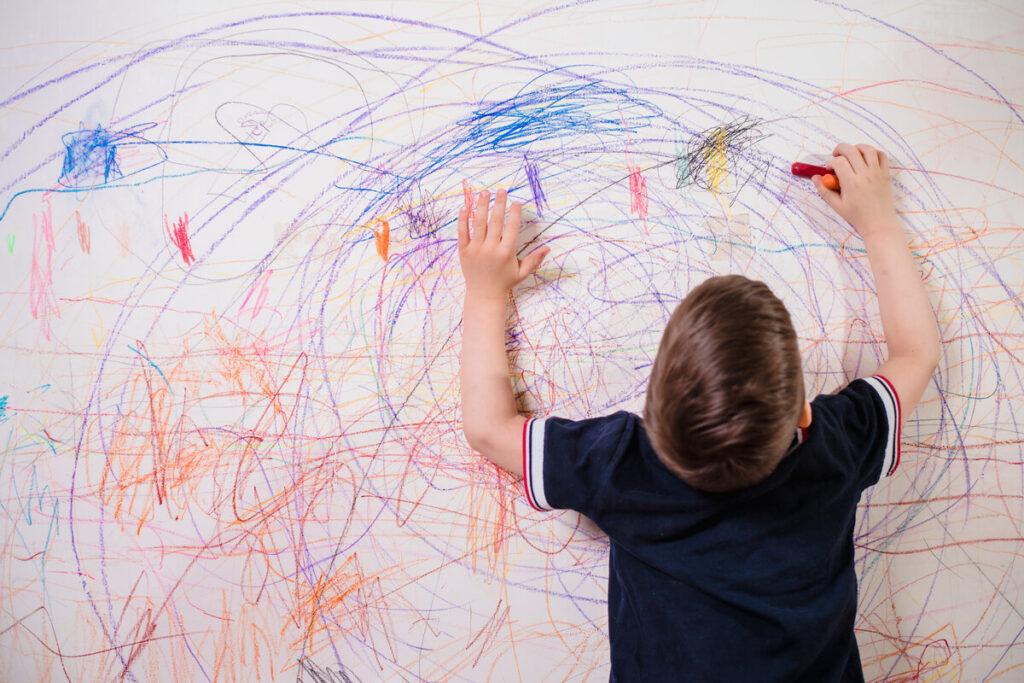
A fresh crayon masterpiece across the living room wall is practically a rite of passage in a house with little kids. Before you grab the toothpaste everyone swears by, know this: it can work beautifully, or it can leave you with a shiny spot that bugs you more than the crayon ever did.
Around here, wall art happens. And the toothpaste trick is the first thing most parents reach for, because it is all over social media. Some people watch the marks disappear in a few minutes. Others end up with a glossy halo on a flat wall that never quite blends back in.
The difference has less to do with the toothpaste itself and more to do with three things: what kind of crayon it was, what kind of paint is on the wall, and how you use the paste.
Why crayon is so stubborn on walls
Kids’ crayons are basically wax (or another greasy binder) mixed with pigment. So a crayon mark is really two stains stacked on top of each other: a waxy, greasy layer and a layer of color. To get rid of it, you have to break down the grease and lift the color, all without scrubbing off the paint underneath. That is the tricky part.
When the toothpaste trick actually works
Plain white toothpaste contains very fine abrasive particles plus a bit of cleaning agent. That combination is exactly why it can lift a small crayon mark off washable paint, especially satin, semi-gloss or gloss finishes. A small spot, a fresh mark and a sturdy painted wall are the best case scenario, and the trick usually does a pretty good job there.
On the other hand, the odds drop fast on flat or matte paint, on wallpaper that is not labeled washable, or on a big, heavy-handed scribble that covers half the hallway. That is where the abrasive starts working on the wall instead of the crayon.
How to use toothpaste without ruining the paint
Always test first.
- Pick the right paste. Use a plain white paste, not a gel, and skip anything with colored specks or beads.
- Do a spot test. Dab a pea-sized amount in an out-of-the-way spot, like behind a door or near the baseboard, where a dull or shiny patch would not show much.
- Apply a thin layer. If the test spot looks fine, spread a very thin coat over the crayon mark without pressing hard.
- Let it sit. Give it at least 15 minutes so the cleaning agents have time to loosen the wax.
Now comes the part where most of the damage happens: wiping it off. Lightly dampen a soft sponge or a microfiber cloth and work from the edges of the mark toward the center, using short, gentle strokes. Rinse the sponge, go over the area a second time to remove any leftover paste, then pat it dry.
If the crayon is fading but the spot is starting to look shinier than the rest of the wall, stop right there. That shine means you are polishing the paint finish itself, and the more you rub, the more noticeable it gets.
When to skip toothpaste altogether
Some surfaces just do not tolerate even a mild abrasive. Very flat paint, thin wallpaper and older walls with paint that is already a little fragile all fall into that group. On those, go straight to a gentler method.
The gentle method to try first
Start by scraping off the excess crayon with the dull edge of an old plastic card, like a gift card or an expired loyalty card. Go slowly and keep the card nearly flat so you do not scratch the wall. Then wipe the area with a sponge dipped in warm water and a little dish detergent (or a weak washing soda solution), rinse with clean water and dry it well.
Other options for stubborn marks
If the mark is still hanging on, or if you would rather leave the toothpaste in the bathroom, a few other options work well as long as you go step by step:
- A melamine sponge (the “magic eraser” kind), used with a very light touch on small areas, ideally on satin paint rather than flat.
- A crayon eraser or an art gum eraser, which does the same gentle scrubbing job but in a more controlled way.
- Warm water and mild detergent, repeated a few times, which is often enough for light or older marks.
Whatever you choose, the rule is the same: start with the gentlest option, check your progress often, and back off the moment the finish starts to change. A faint trace of crayon is a lot easier to live with than a patch of wall that suddenly shines in the afternoon light.