Cauliflower has a reputation problem at a lot of family tables, mostly because of that smell and the soggy, gray florets so many of us grew up with. Cooked the right way, though, it turns sweet, tender and surprisingly easy to sneak into weeknight dinners. Here is how long it needs with every method I reach for, plus the one trick that tells you it is ready.
Around here, cauliflower shows up in casseroles, on sheet pans, mashed next to a roast and sometimes all on its own with a little butter. The method changes with the night, but the goal is always the same: tender all the way through, never mushy.
Start with the same simple prep
Whatever method you choose, the first steps do not change. Cut away the thick stem at the base with a sharp knife, then break or slice the head into florets of roughly the same size so they cook evenly. Give them a good rinse under cold running water to wash away any dirt hiding between the little buds.
The one exception is the whole roasted version further down, where you keep the head in one piece and simply trim the leaves and the bottom of the stem so it sits flat.
How to tell your cauliflower is done
You do not need a timer to be perfect, because the test is easy. Slide the tip of a knife into the thickest part of a floret: if it goes in without any resistance, it is cooked. If you have to push, give it a couple more minutes and check again. Cooking times below are a starting point, since the size of your florets matters more than anything else.
Boiling on the stovetop
This is the classic, and it works well when you want plain, tender cauliflower for a side dish or a mash.
- Bring a large pot of water to a boil and add a good pinch of coarse salt. A bouillon cube adds flavor if you have one in the pantry.
- Add a squeeze of lemon juice. It brightens the taste and helps the florets stay nice and white instead of turning grayish.
- Drop in the florets, making sure the water covers them, and cook over high heat for 15 to 20 minutes.
- Drain them well, then plunge them into a big bowl of ice water to stop the cooking right away.
If the cauliflower is headed for a gratin or a skillet afterward, take it out 2 to 3 minutes early, since it will keep cooking in the oven or the pan.
In a stovetop pressure cooker
Set the rinsed florets in the steamer basket and pour an inch or so of salted water into the bottom of the pot. Lock the lid and heat it until the valve starts to hiss, then lower the heat and keep it going. Pick your texture: about 11 minutes for a bit of crunch, 12 minutes for tender and 14 minutes for very soft. Release the pressure as soon as the time is up and lift out the basket.
In an electric pressure cooker
This is the fastest option on a busy night. Put the rinsed florets in the pot with about 3/4 cup of water and cook on high pressure for 4 minutes, or 6 minutes if you are starting from a bag of frozen cauliflower. That is it.
In a steamer
If you own a countertop steamer (or a steamer basket over a pot of simmering water), place the florets in the basket and let them steam for about 20 minutes. Steaming keeps the texture a little firmer and the flavor milder, which picky eaters tend to appreciate.
In the air fryer
For golden, slightly crispy florets with almost no effort, the air fryer is my favorite. Toss the florets with a drizzle of olive oil, salt, pepper and whatever spices you like (garlic powder and paprika are a safe bet with kids). Spread them in the basket and cook at 350°F for 15 to 20 minutes, shaking the basket halfway through so every side browns evenly.
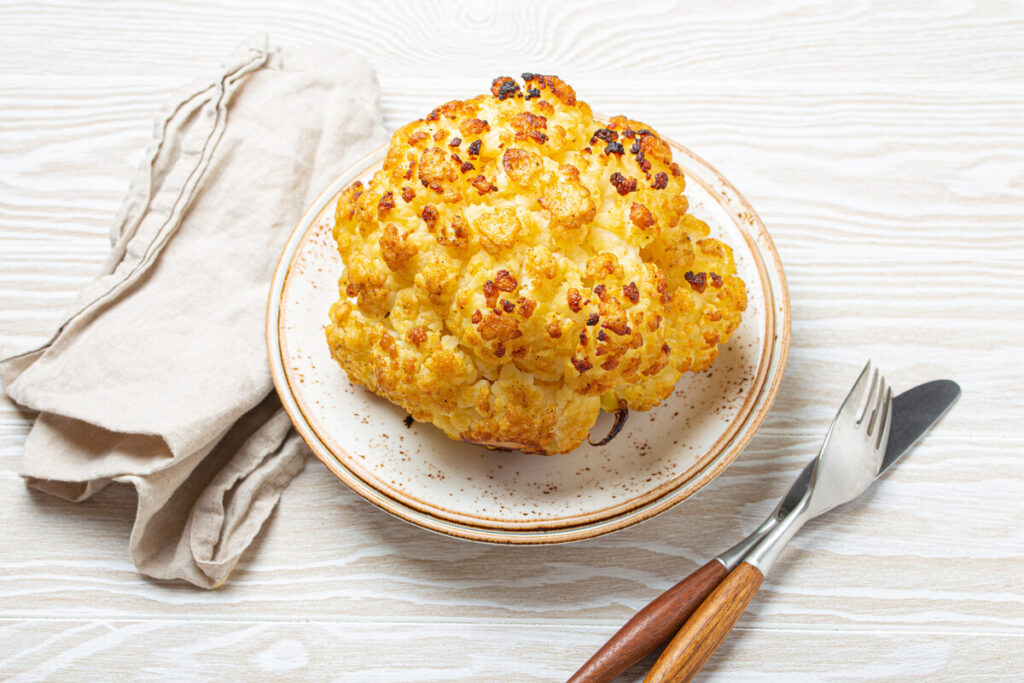
Roasting a whole head in the oven
It is the slowest method, but it is also the one that makes everyone at the table stop and look. It happens in two steps, which is what keeps the inside tender:
- Precook the whole head in boiling salted water for about 10 minutes, then drain it well.
- Brush it all over with a homemade glaze, for example honey, olive oil and a splash of hot sauce, then roast it at 450°F for 25 to 30 minutes until the outside is deeply golden.
Set it on a platter and slice it at the table like a little roast. Even the people who swear they do not like cauliflower usually come back for a second wedge.