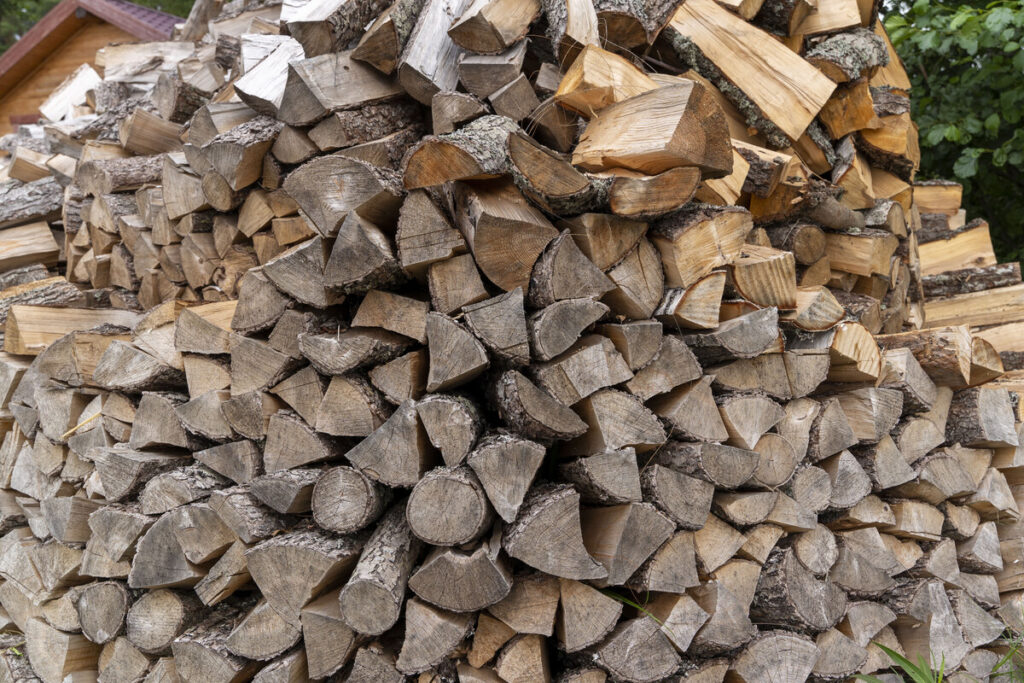
If you toss a plastic tarp over your woodpile every fall, you may be doing the opposite of what you want. A long side-by-side comparison found that tarped logs dried no better than logs left out in the open.
Around here, the woodpile is one of those chores we all do on autopilot. Stack it, cover it, forget it. But a wet log that hisses and smokes is no fun on a cold night, so it is worth getting the drying part right.
Why a tarp does not help as much as you think
It feels logical: rain is wet, a tarp blocks rain, so the wood stays dry. The catch is that wood dries mostly through air moving around the logs, not just through staying out of the rain. A waterproof cover that sits tight on the pile traps moisture inside and slows that airflow.
In a six-month comparison, three stacks were tested: one left uncovered, one under a plastic tarp and one under a roof. The tarp gave no drying advantage at all. The uncovered stack dried about as well as the one under a roof, and all of them landed near 18% moisture, which is dry enough to burn well.
What the test also suggests
- Roof or no roof, similar results. Open-air stacks matched roofed ones in that test.
- Time matters. The researcher noted that about 60 days was enough for the species tested, though softer and drier-climate woods may dry sooner than dense hardwoods.
- Climate counts. The test ran through spring and summer in a mild climate, so a rainy or snowy region may behave differently.
How to stack firewood so it dries faster
- Get it off the ground. Use pallets, a rack or two rows of scrap boards so air can flow underneath and damp soil does not wick up.
- Pick a breezy, sunny spot. Sun and wind do most of the work. A shady corner behind the shed will stay damp longer.
- Leave gaps. Stack loosely in rows, with a little room between logs and between rows, so air can pass through.
- Split it first. Split logs dry far faster than whole rounds because more of the inside is exposed.
- Keep the sides open. Never wrap the whole pile tightly.
If you still want some cover
Skipping the tarp does not mean ignoring a soaking storm or heavy snow. If you want protection, cover only the top of the stack with a sheet of scrap metal, plywood or a tarp pulled just over the top layer, and leave the sides bare. That keeps the worst of the rain off while air keeps moving through.
Check before you burn
Do not trust the calendar alone. Dry firewood looks gray or yellowed, has cracks at the ends, feels light and makes a hollow clunk when you knock two logs together. A cheap moisture meter, which is easy to find at any hardware store, takes the guessing out. Aim for roughly 20% or less.
Save the tarp for covering the car or the patio furniture, and let that woodpile breathe.