A poached egg looks like something you only get at brunch, but you can make one at home in about five minutes. The trick is knowing a few small moves that keep the white together and the yolk soft and runny.
Around here, poached eggs are my favorite way to turn a plain piece of toast or a sad little salad into an actual meal. They also have a reputation for being fussy, and plenty of first attempts end up looking more like egg drop soup than anything you would put on a plate. The good news is that once you understand what is going on in the pot, it gets a lot less scary. Below are three methods, from the classic stovetop version to a shortcut you can do in the microwave.
How long does a poached egg take to cook
It depends on the method you use, but you are always looking at somewhere between about 1 1/2 and 4 minutes. A larger egg needs a little more time, and a smaller one a little less. Pull it too early and the white will still be loose; leave it too long and you lose that runny center, which is kind of the whole point.
The classic stovetop method
This is the one to learn first. You only need an egg, some vinegar, a saucepan, a slotted spoon and a bowl of ice water.
- Start with the freshest egg you have. A fresh egg has a firmer white that holds together in the water, while an older one spreads out into thin, wispy strands.
- Crack the egg into a small cup or ramekin first. That way you can slide it gently into the water instead of dropping it in from a height.
- Bring about a quart of water to a simmer and add a splash of white vinegar, up to a scant 1/2 cup. The vinegar helps the white set faster. Many people also leave the salt out of the water and season the egg once it is on the plate.
- Give the water a good stir with a spoon to create a gentle whirlpool.
- Lower the cup right to the surface of the swirling water and tip the egg in with one quick motion.
- Cook for about 3 minutes, keeping the water at a gentle simmer rather than a rolling boil. If any loose bits of white drift away, use the slotted spoon to nudge them back around the yolk.
- Lift the egg out with the slotted spoon and drop it straight into the ice water. This stops the cooking so the yolk stays soft.
- If you want it to look extra neat, trim off the ragged edges of white with kitchen scissors.
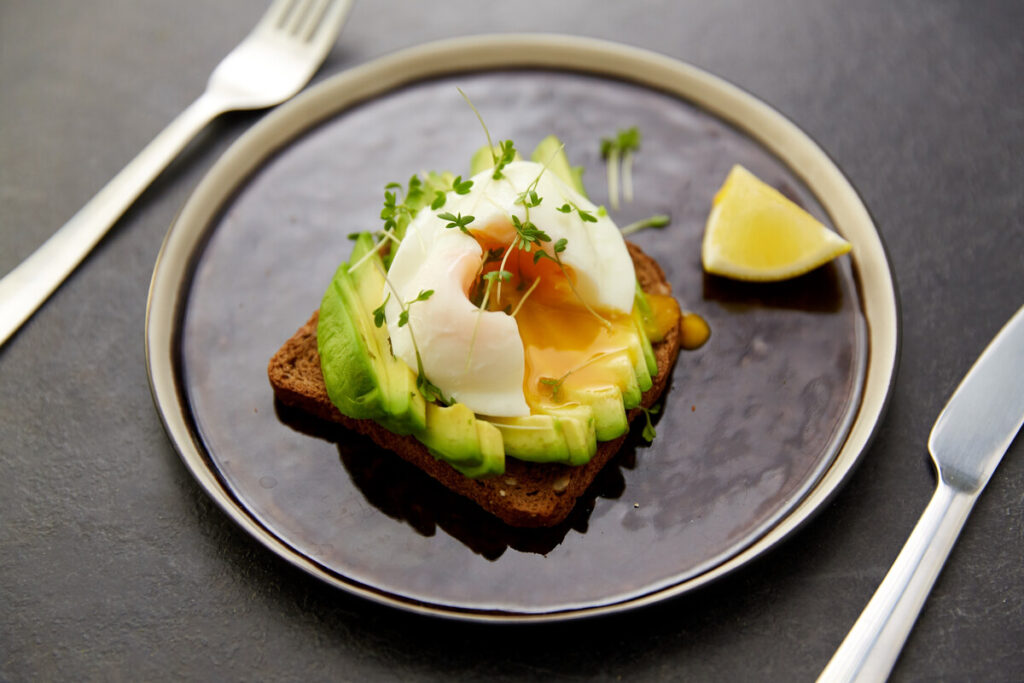
Cut into it and you should find a white that is fully cooked and a yolk that is warm, creamy and runny.
The plastic wrap trick for no-fail poached eggs
If the whirlpool method makes you nervous, this one is almost impossible to mess up. Line a small bowl with a piece of plastic wrap and brush it lightly with oil. Crack the egg into the center, then gather up the edges of the wrap and twist them closed to make a little pouch.
Lower the pouch into boiling water and cook it for 3 to 4 minutes, depending on the size of the egg. Lift it out, carefully unwrap it, and you have a perfectly round poached egg. Use a plastic wrap that is labeled safe for heat if you go this route.
How to poach several eggs at once
Feeding the whole family? The plastic wrap method is your friend here, too. Because each egg is sealed in its own pouch, the whites cannot stick together, so you can cook several of them side by side in the same pot without ending up with one big tangled egg cloud.
The microwave shortcut
On the busiest mornings, the microwave gets the job done. Fill a microwave-safe bowl with room temperature water and stir in about a tablespoon of white vinegar. Gently crack the egg into the middle of the bowl, then microwave it for about 80 seconds. Microwaves vary quite a bit, so check it the first time and adjust by a few seconds if the white is not set yet.
What to serve with poached eggs
Once you have the hang of it, poached eggs go with just about everything. Slide one onto buttered toast, set it on top of a green salad, or add it to a bowl of leftover roasted vegetables for an easy lunch. It really is less complicated than it looks, and after a couple of tries you will wonder why you ever thought poached eggs were restaurant-only food.